Why export projects need stricter fabrication control
Steel components used in export projects often travel long distances by truck, container, and sea freight before reaching the job site. During this process, the components must remain traceable, protected, and easy to match with erection drawings. If the fabrication process is not controlled properly, the installation team may face missing parts, wrong component codes, misaligned holes, coating damage, or unclear assembly sequence.
These issues are more difficult to solve on overseas sites because replacement parts take time to manufacture and ship. Local modification may also increase labor cost, affect structural quality, and delay the overall project schedule. That is why fabrication accuracy, inspection, marking, and packing should be planned before the first component enters production.
Export-oriented quality control is not only about making steel components look good. It is about making sure every beam, column, plate, brace, and connection detail can be delivered, identified, assembled, and used as intended.
What export standard steel fabrication means
Drawing review before production
Before fabrication begins, shop drawings, connection details, member lists, bolt specifications, and erection sequences must be reviewed carefully. Drawing review helps confirm that the steel components can be manufactured, transported, and installed according to the project requirements.
This stage is especially important when the project involves multiple building zones, large-span frames, crane beams, industrial platforms, roof trusses, or special-shaped steel members. Revision control is also necessary, because outdated drawings can cause wrong production and confusion during packing or installation.
Material control and traceability
Export projects often require clear material control. Steel plates, H-beams, pipes, profiles, bolts, welding materials, and coating products should match the approved project specifications. Material certificates, steel grade confirmation, and batch traceability help support quality management from raw material to finished component.
For structural steel fabrication, using the correct material is not optional. The material must match the design requirement, load condition, environmental exposure, and applicable project standard. Traceability also helps contractors and project owners review documentation when required.
Manufacturing accuracy and fit-up control
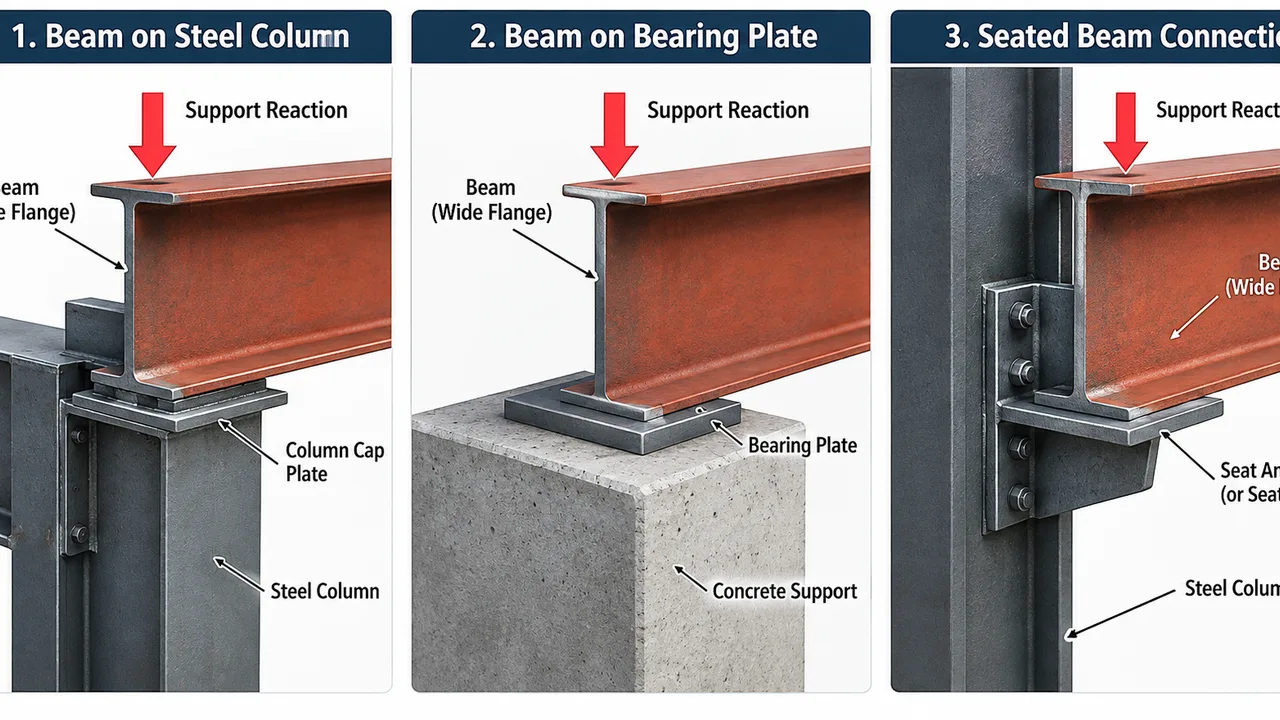
Manufacturing accuracy determines how smoothly steel components fit together on site. Cutting length, hole position, connection plate alignment, weld location, bracket placement, and component straightness all affect installation speed.
In export standard steel fabrication, fit-up control should be checked before final welding and again before surface treatment. This helps reduce the risk of mismatch between connected parts and supports a smoother erection sequence at the destination site.
Quality checkpoints from raw steel to finished components
Cutting, drilling, and component preparation
The production process usually begins with cutting, drilling, beveling, edge preparation, and component marking. CNC cutting and drilling can improve consistency and reduce manual errors, especially for repeated members and connection plates with strict hole positioning requirements.
Accurate preparation also supports better welding quality. When plates, beams, and braces are prepared correctly, assembly becomes more predictable and the chance of forced fit-up is reduced.
Welding quality and structural integrity
Welding is one of the most important parts of structural steel fabrication. Weld size, weld appearance, joint preparation, heat control, and deformation control all influence the final quality of the component. For load-bearing structures, welding work must be performed according to approved production requirements.
Visual inspection, dimensional checks, and additional testing may be used depending on the project specification. The goal is to make sure welded components can perform reliably during transportation, lifting, erection, and long-term service.
Dimensional inspection before surface treatment
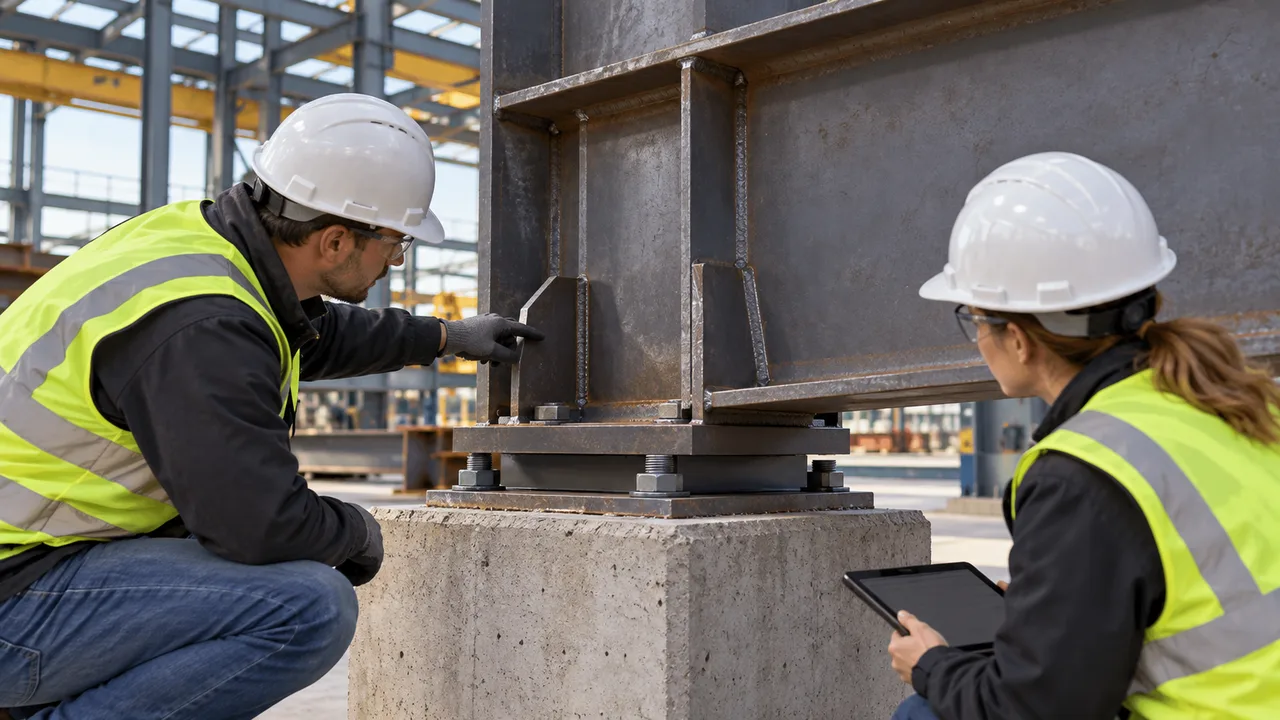
Before painting or galvanizing, dimensional inspection helps confirm that the component is ready for the next stage. Important inspection points include member length, hole spacing, base plate position, connection plate angle, column straightness, beam geometry, and overall assembly compatibility.
Once surface treatment is completed, correcting major dimensional issues becomes more difficult and may damage the coating. Early inspection helps prevent avoidable rework and protects the project schedule.
Surface treatment for exported steel structures
Exported steel components may be exposed to humidity, sea freight conditions, outdoor storage, and different job site environments before installation. Surface treatment must therefore be selected according to project location, corrosion risk, transportation method, and expected service life.
Common surface protection steps may include blasting, primer coating, intermediate coating, finish coating, or hot-dip galvanizing for selected components. Coating thickness, surface cleanliness, curing condition, and handling protection should be checked before packing.
For coastal regions, humid climates, industrial zones, or long-distance shipping, anti-corrosion protection becomes even more important. Proper surface treatment helps maintain the appearance and durability of the steel structure after arrival and during long-term use.
Export packing and component identification
Clear marking for faster site installation
Clear component marking is essential for overseas installation. Each steel member should be marked according to the erection drawings, packing list, and project sequence. Labels, component codes, bundle marks, and part numbers help the site team identify the correct members quickly.
Good marking reduces the time spent searching for parts and lowers the risk of installing components in the wrong position. This is especially useful for projects with multiple identical frames, large quantities of secondary members, or phased construction.
Packing designed for sea freight
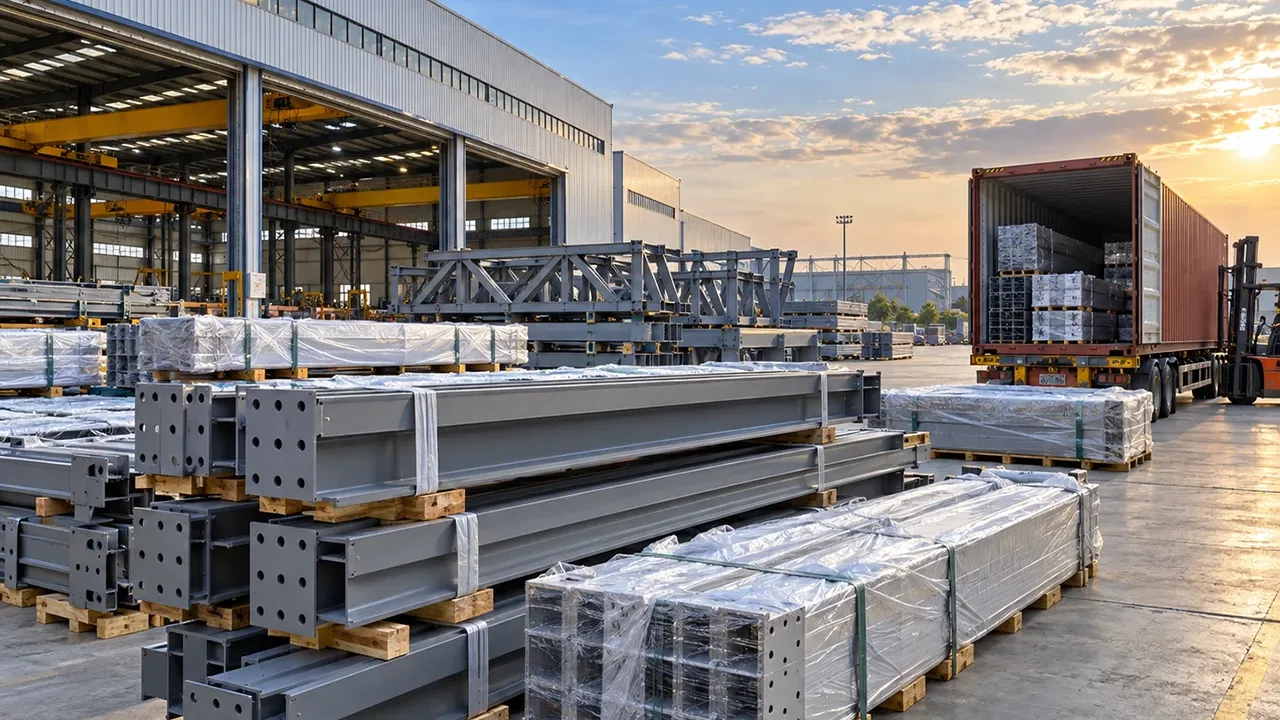
Export packing should protect steel components during handling, loading, transportation, unloading, and temporary site storage. Main members, secondary members, plates, bolts, accessories, and small parts should be packed in a way that reduces damage and prevents loss.
Heavy bundles may require proper support, separation, and lifting consideration. Small parts such as bolts, nuts, washers, brackets, and connection accessories should be packed and labeled clearly so they can be matched with the correct installation area.
Loading sequence and container planning
Container loading is not only about saving space. It should also consider unloading convenience, component weight, installation sequence, and protection during shipment. When the loading plan follows the project erection logic, site work becomes more organized after arrival.
For large projects, packing lists and container records help the project team track which components are shipped, which container they are in, and how they should be handled after unloading.
Fabrication details that reduce overseas installation risk
Many installation problems can be prevented at the fabrication stage. Accurate bolt hole drilling, correct plate positioning, reliable welding, proper bracing component preparation, and clear component codes all help reduce site uncertainty.
Export standard steel fabrication should focus on making the installation process predictable. When components arrive with accurate dimensions, clean markings, complete accessories, and matching drawings, the site team can install the structure with less cutting, drilling, and adjustment.
This is especially important for projects that involve strict schedules, remote locations, limited skilled labor, or international contractors managing work across different countries.
Suitable projects for export standard steel fabrication
Export-ready fabrication is suitable for many types of steel structure projects where quality, packing, and installation coordination are important. These may include:
- Steel structure warehouses
- Steel factory buildings
- Industrial steel platforms
- Heavy steel frames
- Portal frame buildings
- Roof truss structures
- Crane-supported industrial buildings
- Logistics and manufacturing facilities
- Special-shaped steel structure components
- Overseas EPC and contractor supply projects
Each project type may have different fabrication priorities. A warehouse may focus on fast erection and large repeated frames, while an industrial platform may require closer control of connection details, floor openings, and access systems.
Recommended quality control points
The following quality control points are commonly considered for export fabrication projects.
| Quality Item | Fabrication Control | Export Project Value |
|---|---|---|
| Material Certificate | Steel grade, batch, and specification review | Supports traceability and project documentation |
| Cutting Accuracy | CNC cutting and length verification | Improves fit-up and reduces site modification |
| Bolt Hole Drilling | Hole spacing and alignment check | Helps components connect smoothly during erection |
| Welding Inspection | Visual check, weld size control, and deformation review | Supports structural reliability and assembly quality |
| Dimensional Control | Member length, plate position, and geometry inspection | Reduces mismatch after long-distance delivery |
| Surface Treatment | Blasting, coating, galvanizing, and thickness check | Improves corrosion protection during shipping and service |
| Component Marking | Member code, bundle label, and drawing coordination | Speeds up identification on overseas job sites |
| Packing and Loading | Bundle planning, accessory packing, and container records | Reduces damage, loss, and unloading confusion |
Why choose XTD Steel Structure for export standard steel fabrication
XTD Steel Structure supports steel fabrication projects that require controlled production, clear component identification, export preparation, and practical delivery coordination. The company works with steel structure projects such as warehouses, factories, industrial buildings, platforms, trusses, and special steel structures.
For export projects, fabrication capability must be supported by communication, documentation, and quality management. Important service capabilities include:
- Engineering and fabrication drawing coordination
- CNC cutting, drilling, welding, and assembly
- Dimensional inspection before surface treatment
- Surface preparation and anti-corrosion coating
- Component marking and packing list preparation
- Export packing for steel structure components
- Container loading and delivery coordination
- Support for overseas steel structure projects
By connecting production control with export logistics, XTD Steel Structure helps overseas clients reduce installation risk and improve project delivery efficiency.
Project workflow for export fabrication orders
Drawing and requirement confirmation
The workflow begins with confirmation of structural drawings, connection details, steel specifications, project destination, coating requirements, packing expectations, and delivery schedule. This stage helps align fabrication work with the technical and logistical needs of the project.
Fabrication, inspection, and surface protection
After confirmation, steel components move through cutting, drilling, assembly, welding, inspection, and surface treatment. Quality checks are arranged during production so that problems can be corrected before components are packed for shipment.
Packing, loading, and delivery coordination
Finished components are marked, bundled, packed, and loaded according to the project plan. Packing lists, component codes, and container information support easier unloading and installation after arrival at the destination.
Export standard steel fabrication FAQs
What makes steel fabrication suitable for export?
Steel fabrication is suitable for export when components are produced with accurate dimensions, reliable welding, correct surface treatment, clear marking, organized packing, and documentation that supports overseas delivery and installation.
How can installation problems be reduced on overseas projects?
Installation problems can be reduced through early drawing review, strict dimensional control, accurate bolt hole drilling, clear component marking, complete accessory packing, and coordination between fabrication drawings and erection drawings.
Can fabricated steel components be packed for container shipping?
Yes. Steel components can be bundled, marked, protected, and loaded according to container requirements. Proper packing helps reduce damage, missing parts, and confusion during unloading.
What surface treatment is recommended for exported steel structures?
The surface treatment depends on the project environment. Common options include blasting with anti-corrosion paint systems, industrial coatings, or galvanizing for selected components where higher corrosion protection is required.
Can XTD Steel Structure fabricate based on client drawings?
Yes. XTD Steel Structure can review client drawings, coordinate fabrication details, manufacture steel components, apply surface treatment, and prepare export packing based on project requirements.
Prepare your fabrication drawings for export production
Export standard steel fabrication helps overseas steel structure projects move from factory production to site erection with fewer risks. Accurate processing, reliable welding, controlled coating, clear marking, and export-ready packing all contribute to smoother installation after delivery.
To start your fabrication order, prepare structural drawings, connection details, material requirements, destination country, coating requirements, packing expectations, and project schedule. With the right fabrication and export preparation, your steel structure components can arrive ready for organized installation and long-term use.