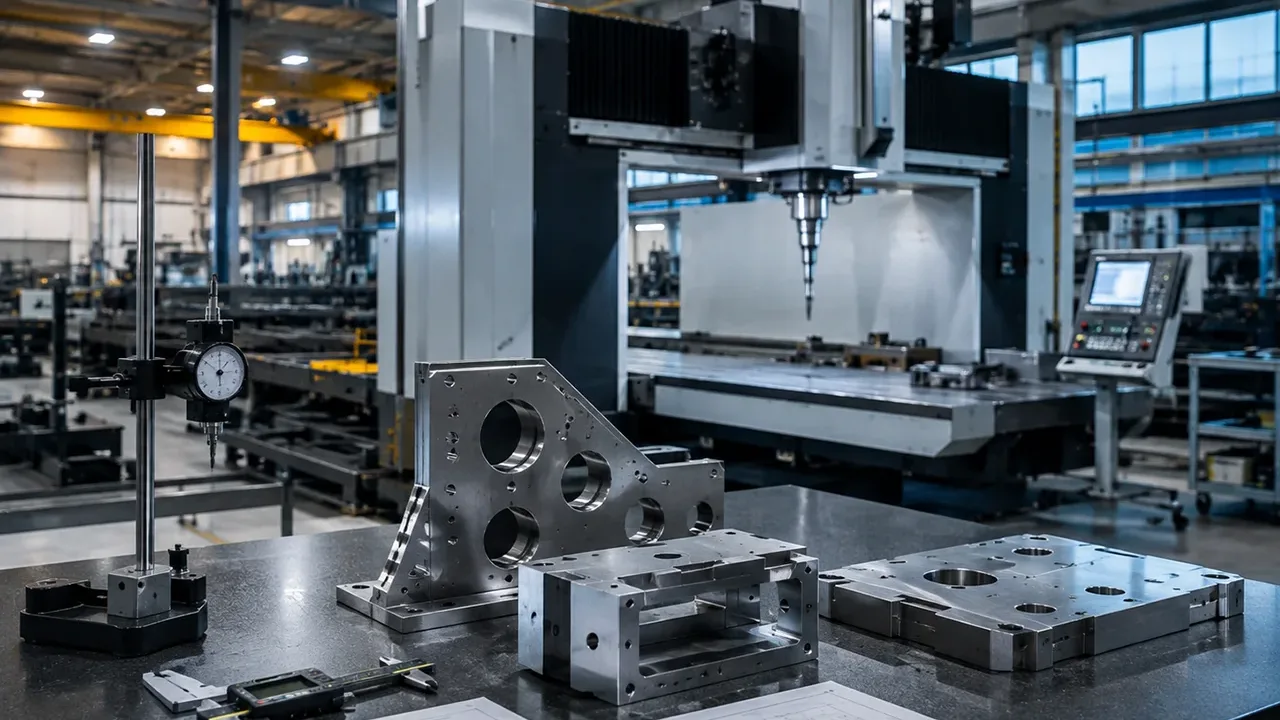
High Precision Steel Fabrication Services
A complete high precision steel fabrication service connects approved engineering data with controlled manufacturing processes. Components are produced according to defined drawings, dimensions, connection requirements, tolerances, and project specifications rather than relying on isolated workshop interpretation.
The service can support repetitive production as well as complex custom assemblies. In repetitive structures, precision helps maintain consistency across multiple frames or bays. In specialized structures, it supports accurate geometry at critical nodes, interfaces, and segmented assemblies.
Fabrication Based on Controlled Engineering Data
Reliable production begins with clear and approved fabrication information. Drawings and models should define component geometry, hole locations, connection interfaces, reference dimensions, assembly relationships, and other critical requirements.
Revision control is equally important. Production teams need access to current approved information so that design changes are correctly reflected in affected components before cutting, drilling, welding, or assembly progresses.
Precision Across Individual Components and Complete Assemblies
Accuracy at the level of a single plate or beam is important, but complete structural compatibility requires broader control. Connected members must align with one another, bolt groups must correspond, and assembly dimensions must remain within acceptable project requirements.
This becomes increasingly important in large structures where small deviations can accumulate across multiple bays, truss segments, floor levels, or interconnected assemblies.
Scope of High Precision Steel Fabrication
Steel Plate and Section Processing
Precision fabrication can cover a wide range of structural materials and component forms, including:
- Structural steel plates
- H-sections and I-sections
- Box sections and built-up members
- Tubular steel components
- Connection plates and stiffeners
- Project-specific fabricated profiles
The processing route depends on component geometry, structural function, material thickness, connection requirements, and production volume.
CNC Cutting and Profiling
CNC processing supports controlled cutting geometry and repeatable component dimensions. It is particularly useful for complex plate shapes, connection parts, stiffeners, gusset plates, and repeated components where manual variation should be minimized.
Digital processing references can improve consistency between approved fabrication information and physical output when production data is properly prepared and controlled.
Precision Drilling and Hole Preparation
Accurate bolt hole positioning is critical for connection alignment. Hole diameter, spacing, edge distance, and multi-hole patterns must correspond with mating components so that site assembly can proceed efficiently.
Precision drilling is especially important for splice plates, end plates, beam-column connections, truss nodes, bracing interfaces, and repeated bolted assemblies.
Welding and Structural Assembly
Welding introduces additional requirements for fit-up, sequence planning, geometry control, and distortion management. Components should be positioned and checked before welding progresses, particularly where multiple plates or members form a complete assembly.
Controlled assembly helps maintain reference dimensions and connection locations throughout production.
Final Inspection and Release
Before shipment, completed components may undergo dimensional verification, weld inspection, surface checks, marking confirmation, and documentation review. The inspection scope should reflect project specifications and the importance of critical structural interfaces.
Why Precision Matters in Structural Steel Fabrication
Reliable Connection Alignment
Steel structures depend on connections between beams, columns, braces, trusses, plates, and other components. When interfaces are fabricated accurately, bolted and welded connections can be completed with fewer avoidable adjustments.
Reliable alignment is especially important where multiple fabricated components converge at a single node or where structural geometry must be maintained across long distances.
Faster and More Predictable Site Installation
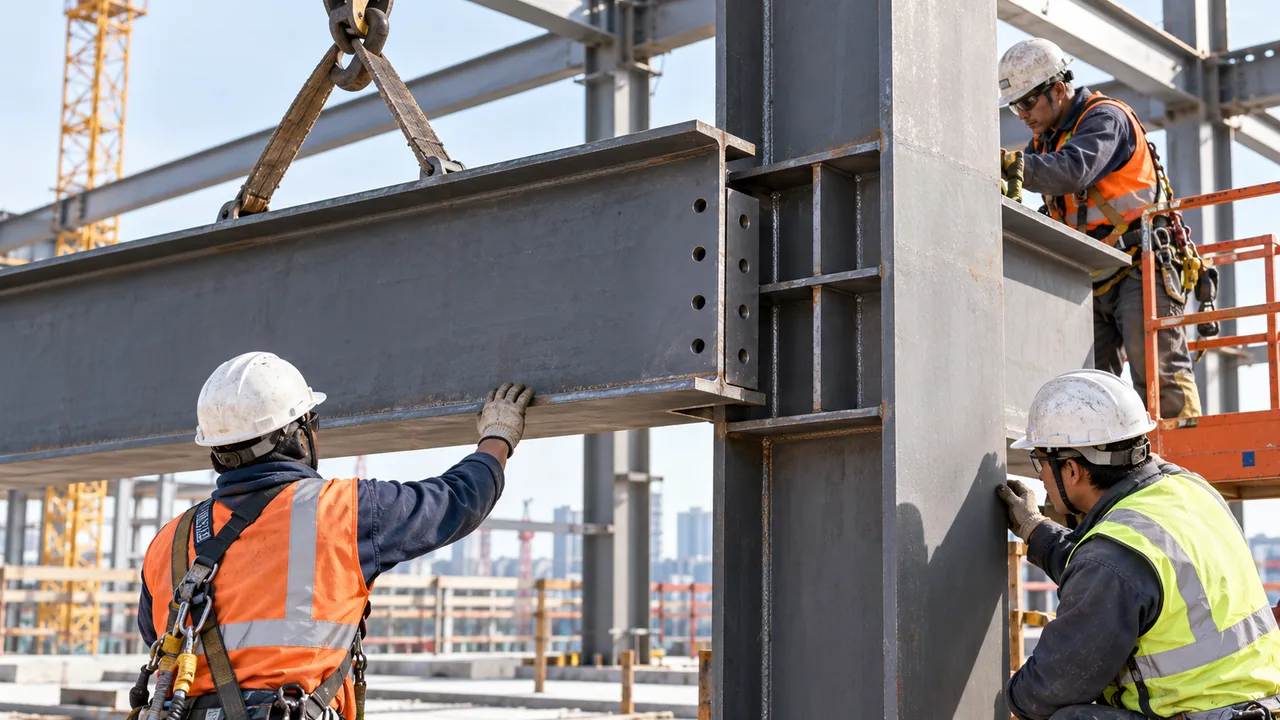
Site erection becomes more difficult when holes do not align, member lengths vary unexpectedly, or connection plates require extensive adjustment. Precision-focused production can reduce these risks and support more predictable erection sequencing.
Less field modification also helps installation teams concentrate on planned assembly rather than correcting preventable fabrication mismatches.
Control of Cumulative Tolerance
A small deviation in one component may appear insignificant, but repeated deviations can accumulate across a long structural grid. Multi-bay factories, large warehouses, segmented trusses, and multi-storey frames require careful control of shared dimensions and interfaces.
Tolerance management therefore considers not only isolated members but also how multiple fabricated assemblies interact.
Support for Complex Structural Geometry
Irregular structures, special nodes, curved members, and multi-directional connections often require closer dimensional control than standard repetitive framing. Accurate fabrication helps preserve intended geometry from engineering information through physical assembly.
Precision Fabrication Capabilities
CNC-Based Material Processing
CNC equipment can support cutting, drilling, profiling, and repeated processing operations according to controlled production information. The primary advantage is repeatability, particularly when multiple components share the same geometry or connection pattern.
However, machine capability must be supported by correct data preparation, production planning, equipment calibration, and inspection.
Controlled Fit-Up and Assembly
Fit-up establishes the geometry of components before final welding. Depending on the project, production teams may use reference lines, controlled dimensions, fixtures, jigs, temporary restraints, or trial assembly methods.
The objective is to verify critical interfaces before later production stages make correction more difficult.
Welding Distortion Control
Heat from welding can cause deformation, particularly in long members, thin plates, built-up sections, and asymmetrical assemblies. Suitable welding sequences, balanced procedures where practical, temporary restraint, and intermediate dimensional checks can help manage distortion.
Component Marking and Traceability
Clear component identification supports production control, packing, shipment organization, and site erection. Marking systems can help installation teams match members with drawings and assembly sequences, especially on large international projects.
Steel Structure Components Requiring High Precision
Columns and Primary Beams
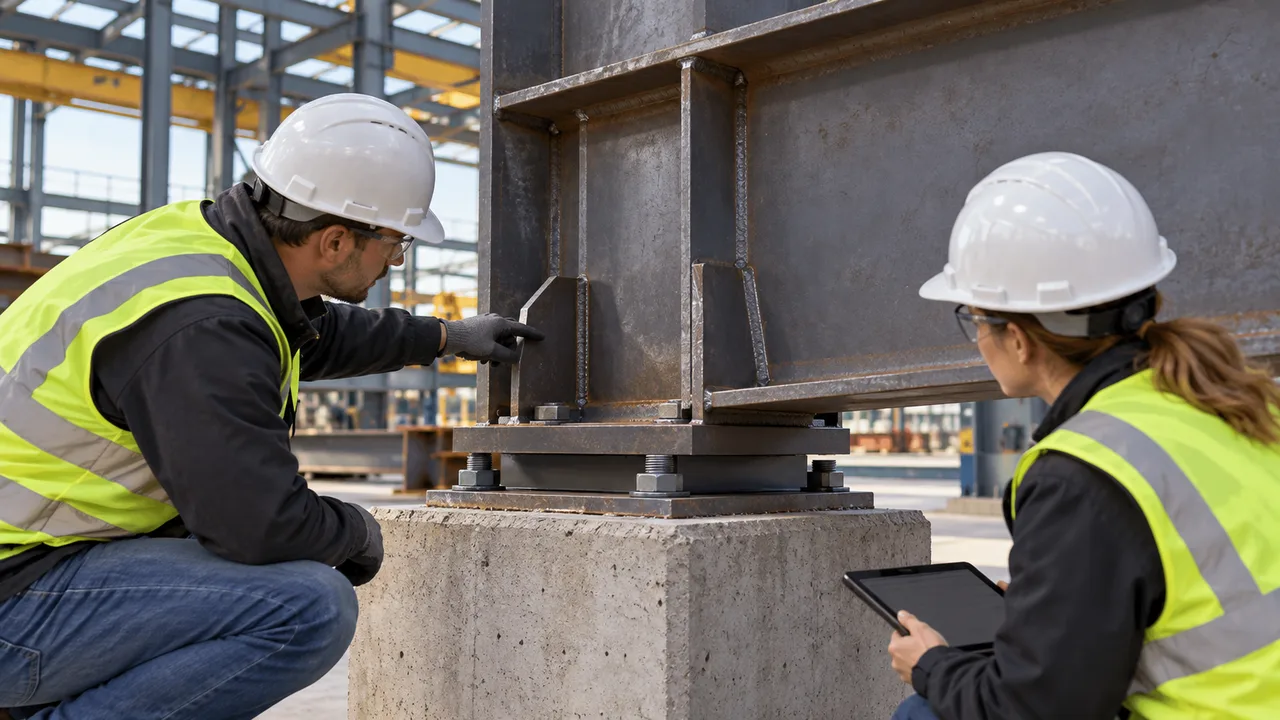
Primary structural members require accurate control of overall length, base plate position, end plate geometry, splice interfaces, stiffeners, and connection locations. Errors at these points can influence adjacent framing and erection alignment.
Trusses and Large-Span Members
Trusses depend on coordinated node positions, chord geometry, diagonal alignment, and segment compatibility. For large-span structures fabricated in transportable sections, each segment must connect accurately during site assembly.
Precision is particularly important where multiple truss sections form a continuous structural geometry.
Box Girders and Built-Up Sections
Built-up members may combine multiple plates, internal stiffeners, diaphragms, and connection elements. Plate alignment, longitudinal geometry, cross-sectional dimensions, and welding distortion require coordinated control throughout production.
Tubular and Special-Shaped Structures
Tubular structures and special-shaped steelwork can involve complex cuts, intersecting members, non-standard nodes, and three-dimensional geometry. These assemblies require accurate interpretation of engineering information and careful control of physical interfaces.
Equipment-Support and Industrial Steelwork
Industrial steelwork may interface directly with machinery, platforms, conveyors, pipe systems, or process equipment. Support points, elevations, connection positions, and operating clearances may require tighter coordination than general building framing.
Applications of High Precision Steel Fabrication
Industrial and Manufacturing Facilities
Production buildings, machinery plants, process facilities, and crane-supported structures often contain multiple operational interfaces. Precision fabrication helps coordinate structural members with equipment zones, crane systems, access platforms, and future installation requirements.
Warehouses and Logistics Buildings
Large warehouses may use repeated frames across long structural grids. Consistency between repeated components can improve erection predictability, while accurate interfaces are valuable for high-bay systems, automated logistics equipment, and project-specific loading arrangements.
Large-Span and Complex Roof Structures
Trusses, space structures, special roof systems, transport buildings, and public facilities may combine large spans with complex geometry. Precision-focused fabrication supports node alignment, segmented assembly, and coordinated site installation.
Multi-Storey Steel Buildings
Multi-storey structures require coordination between beam-column connections, floor levels, vertical alignment, bracing systems, and repeated structural interfaces. Dimensional deviation can affect multiple levels if not identified and controlled early.
Specialized Infrastructure Projects
Industrial platforms, structural corridors, transport-related structures, and project-specific assemblies may involve non-standard geometry and complex interfaces. These applications benefit from controlled fabrication and defined inspection points.
From Engineering Data to Precision Production
Drawing and Model Review
Before production begins, fabrication information should be reviewed for geometry, connection requirements, interfaces, critical dimensions, and constructability. Questions should be resolved before they create uncertainty on the workshop floor.
Production Planning
Production planning can define material allocation, machine routing, batch sequence, assembly priorities, and inspection points. For complex projects, this planning helps coordinate different fabrication operations within a controlled workflow.
Digital Information Transfer
Where suitable systems are available, digital information transfer can reduce repeated manual interpretation between engineering and production. The objective is to maintain consistency between approved project data and physical processing operations.
Revision and Change Control
Design changes must be controlled carefully. Updated information should be identified, affected components reviewed, and obsolete production references prevented from continuing through the workshop.
CNC Processing for Dimensional Accuracy
Precision Cutting
Controlled cutting supports accurate profiles, component dimensions, and edge geometry. This is important for both primary structural elements and smaller connection components that influence assembly accuracy.
CNC Drilling
CNC drilling can support repeatable bolt patterns for splice plates, end plates, connection groups, and other components. Accurate hole positioning reduces the risk of mismatch between mating assemblies.
Profiling Complex Components
Non-standard plate shapes, curved profiles, gussets, and special connection parts may require controlled profiling based on project-specific geometry. Accurate processing helps preserve the intended relationship between connected elements.
Repeatability Across Production Batches
Repeatability is valuable for warehouses, factories, modular projects, and other structures with repeated members. Consistent processing helps maintain common dimensions and connection patterns across large production quantities.
Welding Quality and Dimensional Control
Fit-Up Before Welding
Before welding, joint preparation, gap conditions, alignment, orientation, and reference dimensions should be checked according to applicable requirements. Temporary restraint may be used where necessary to maintain geometry during assembly.
Welding Procedure Control
Appropriate welding processes and sequences should reflect material, thickness, joint type, structural requirements, and approved production procedures. Consistent execution supports both weld quality and dimensional control.
Managing Heat-Induced Distortion
Production teams can monitor deformation during welding and apply suitable sequence planning to reduce uncontrolled movement. Intermediate dimensional checks are particularly useful before distortion becomes difficult to correct.
Post-Weld Verification
After welding, critical geometry may be checked for straightness, overall dimensions, connection positions, interface alignment, and assembly requirements. The required checks depend on component function and project specifications.
Inspection and Quality Control Process
Incoming Material Verification
Material verification can include checking specifications, dimensions, identification, and traceability requirements before fabrication begins. Correct material control establishes a reliable foundation for later production stages.
In-Process Dimensional Inspection
Critical dimensions can be checked during fabrication rather than waiting until final completion. Early detection of deviation helps prevent errors from passing into drilling, welding, assembly, or coating stages.
Weld Inspection
Weld inspection may include visual examination and, where required by project specifications, appropriate non-destructive testing methods. Acceptance should follow applicable technical and contractual requirements.
Final Dimensional Inspection
Final checks can cover overall dimensions, hole locations, interface geometry, member alignment, connection positions, and other project-specific characteristics.
Production Documentation
Depending on project requirements, documentation may include inspection records, material information, component identification, quality status, and release information before shipment.
Tolerance Management for Complex Steel Projects
Project-Specific Tolerance Requirements
Not every dimension requires the same level of control. Effective precision management identifies critical interfaces and directs inspection attention toward dimensions that influence structural assembly, connection compatibility, or operational performance.
Managing Tolerance Accumulation
Long structural grids, repeated bays, multi-segment trusses, and interconnected assemblies can magnify small deviations. Shared datums and coordinated reference dimensions help manage cumulative effects across the structure.
Interface Control Between Separate Components
Factory-fabricated members may be produced at different times or in separate production batches but must connect accurately on site. Common reference points and clearly controlled interfaces are therefore essential.
Precision Fabrication for International Project Delivery
Factory Accuracy Before Export
International projects often separate fabrication and installation across different countries. Accurate factory production can reduce dependence on field cutting, drilling, or modification after components arrive at the destination.
This is one of the practical benefits of high precision steel fabrication for export-oriented structural projects.
Component Identification and Packing Coordination
Marking systems, shipment batches, packing lists, and erection sequences can be coordinated so that components are easier to identify and manage after delivery.
Transportation-Aware Fabrication
Shipping dimensions, container constraints, breakbulk requirements, lifting conditions, and site access can influence component segmentation. Fabrication planning should consider these realities before final production.
Advantages of High Precision Steel Fabrication
A precision-focused fabrication approach can provide several practical advantages:
- Better component fit-up
- More reliable connection alignment
- Reduced need for field modification
- Lower risk of avoidable rework
- More predictable site installation
- Improved repeatability across production batches
- Better control of complex structural geometry
- Stronger coordination between fabrication and erection
The value of precision is greatest when engineering, processing, welding, inspection, and project delivery are treated as connected activities rather than isolated workshop operations.
Why Choose a Precision-Capable Steel Fabrication Partner
Engineering and Detailing Coordination
A capable fabrication partner should understand complex drawings, structural interfaces, connection requirements, revision control, and the relationship between individual components and complete assemblies.
CNC Production Capability
Controlled CNC processing supports repeatable cutting, drilling, and profiling across both custom and high-volume production. Equipment capability should be combined with accurate production data and defined inspection procedures.
Welding and Assembly Experience
Experience with built-up members, trusses, special-shaped components, tubular structures, and industrial steelwork is important where geometry and interfaces extend beyond standard repetitive framing.
Inspection and Quality Management
Defined checkpoints, dimensional verification, weld inspection, identification control, and production documentation help maintain visibility throughout the fabrication process.
XTD Steel Structure supports precision-focused structural projects through coordinated engineering information, CNC processing, controlled fabrication, welding and assembly, dimensional verification, and project-specific quality management.
Frequently Asked Questions
What is high precision steel fabrication?
It is a fabrication service focused on controlled dimensions, accurate connection interfaces, repeatability, and compatibility between components so that fabricated steelwork can be assembled according to the intended structural geometry.
How is high precision fabrication different from standard steel fabrication?
Precision-focused fabrication places greater attention on critical dimensions, shared interfaces, CNC processing, tolerance accumulation, revision control, in-process inspection, and final assembly compatibility.
Which steel components require the highest precision?
Components such as complex trusses, special nodes, connection plates, equipment supports, built-up members, tubular assemblies, and multi-component structural systems often require close dimensional control.
Can precision fabrication reduce site installation problems?
Yes. Accurate hole positions, member geometry, connection interfaces, and assembly dimensions can reduce mismatch, field adjustment, and avoidable rework during erection.
Is the service suitable for international projects?
Yes. Export projects can benefit from accurate factory production, component identification, coordinated packing, transportation-aware segmentation, and reduced dependence on field modification.
Start Your High Precision Steel Fabrication Project
A controlled high precision steel fabrication workflow connects engineering information with CNC processing, drilling, fit-up, welding, dimensional inspection, identification, and shipment preparation. This coordinated approach is valuable where structural geometry, connection accuracy, repeatability, and site assembly performance are critical to project success.
For industrial facilities, warehouses, large-span structures, multi-storey buildings, equipment-support steelwork, or specialized international projects, the fabrication strategy should be developed around actual drawings, component geometry, critical tolerances, production volume, inspection requirements, logistics constraints, and delivery objectives.
“`