Why Fabrication Quality Matters in Steel Building Projects
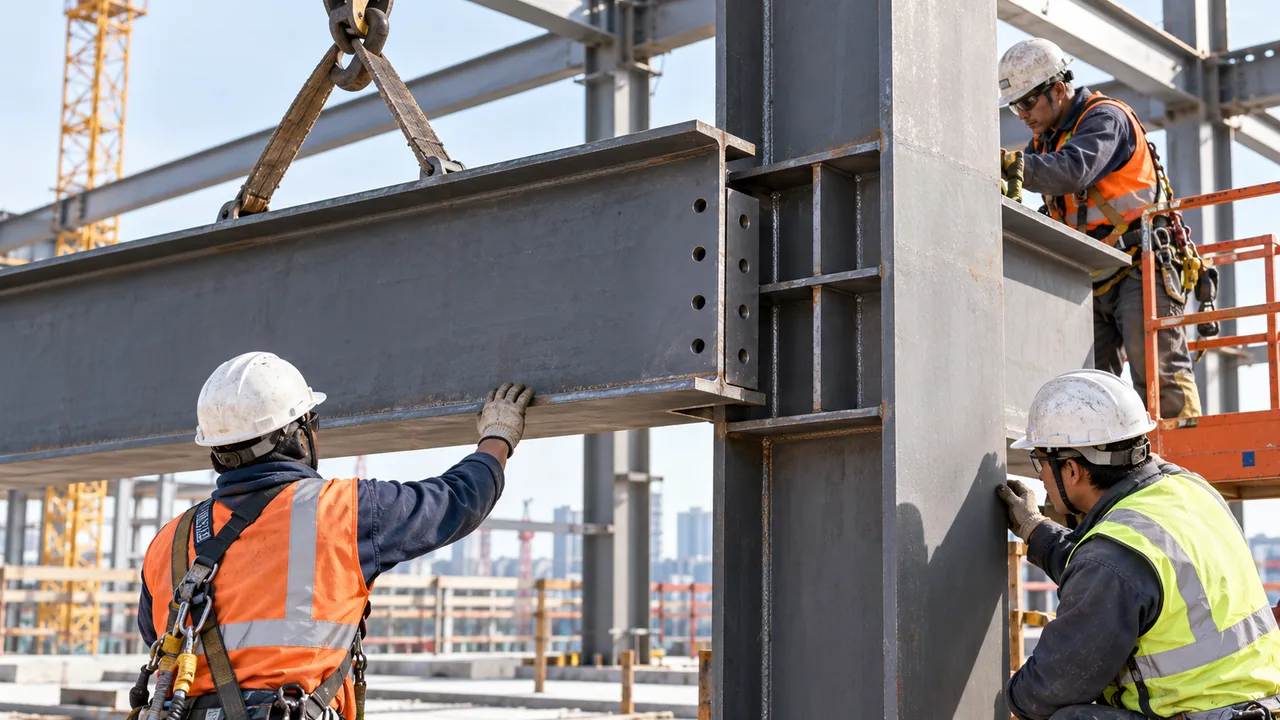
Steel buildings depend on accurate coordination between many structural components. Columns, beams, rafters, trusses, bracing members, plates, brackets, and connection parts must fit together according to the approved drawings. Even a small dimensional error can create delays during erection, especially when the project involves large spans, crane systems, heavy loads, or international delivery.
Good fabrication quality helps reduce common construction problems such as forced alignment, on-site re-drilling, cutting adjustments, delayed bolt installation, welding repair, or mismatched connection details. These issues may look small during production, but they can become expensive once workers, cranes, and equipment are already waiting on site.
With high quality steel fabrication, the project team can improve installation efficiency, reduce rework, protect structural safety, and support a more predictable construction schedule.
What High Quality Steel Fabrication Includes
Accurate Cutting, Drilling, and Profiling
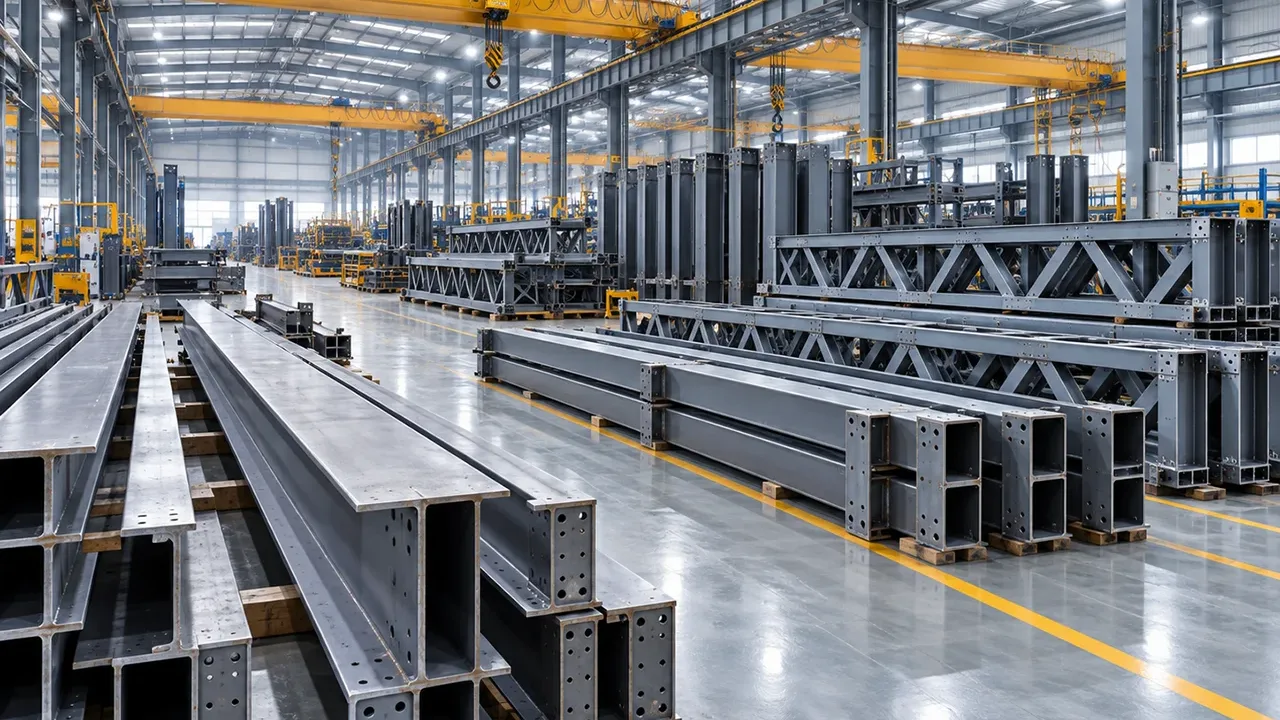
Accurate processing is one of the first signs of a reliable fabrication system. Steel plates, beams, columns, and connection parts must be cut and prepared according to detailed production drawings. CNC cutting, drilling, and profiling help improve consistency and reduce the risk of manual errors.
For steel building structures, hole position is especially important. Bolt holes must match the connected members during site assembly. If hole alignment is inaccurate, installation teams may need to modify components on site, which can weaken efficiency and increase project risk.
Reliable Welding and Assembly
Welding quality affects the strength and reliability of fabricated steel components. Proper joint preparation, stable welding procedures, controlled assembly, and inspection help ensure that members can transfer loads as intended.
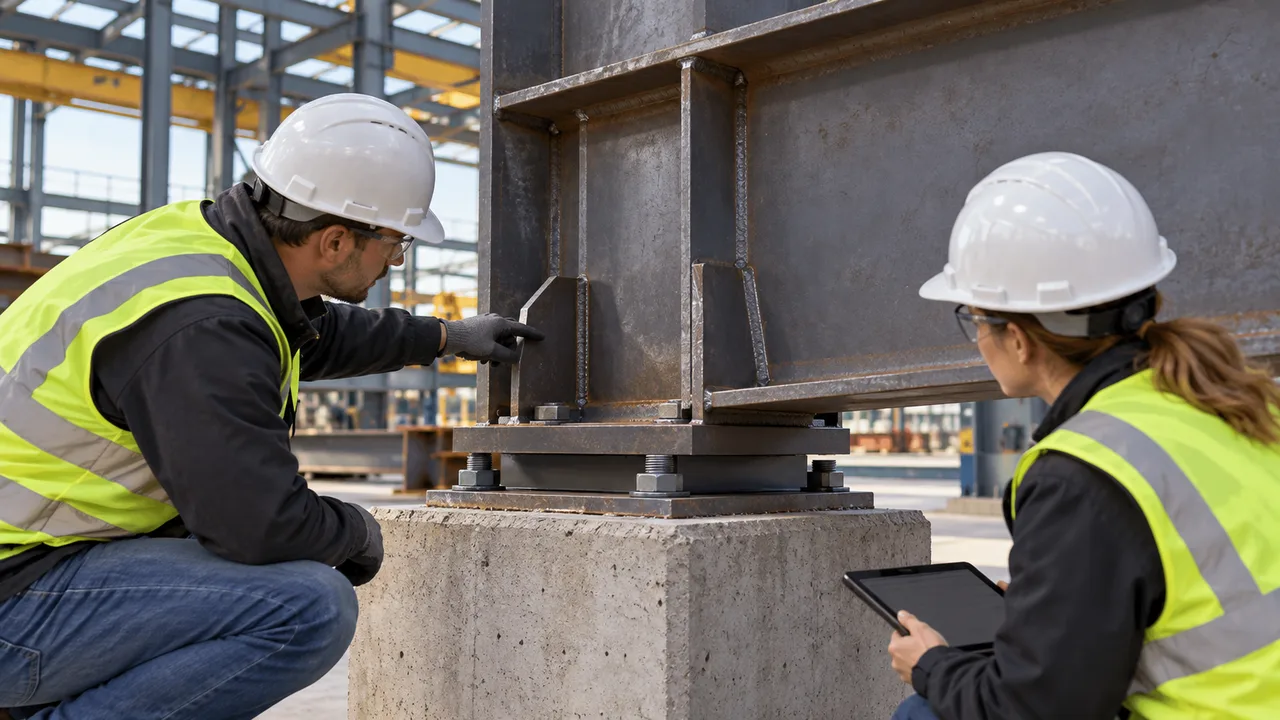
In steel building projects, welding is not limited to large beams and columns. It also applies to base plates, stiffeners, brackets, connection plates, gusset plates, and other smaller parts that support the entire structural system. Consistency across both major and minor components is essential for dependable building performance.
Dimensional Control Before Delivery
Dimensional control helps confirm that fabricated components match the approved drawings before shipment. This includes checking length, hole spacing, plate position, member orientation, connection compatibility, and overall geometry.
Clear marking is also part of quality control. When each component is marked according to the installation sequence, the site team can identify parts more easily and reduce confusion during erection.
Fabricated Components for Steel Building Structures
Columns, Beams, and Main Steel Frames
Main structural members carry the primary loads of a steel building. Columns, rafters, beams, and frame components must be fabricated with accuracy because they define the building’s alignment, height, span, and stability.
For portal frames, multi-span buildings, and industrial structures, the quality of these members has a direct impact on erection speed and structural reliability. Accurate fabrication helps the primary frame stand correctly from the beginning of installation.
Trusses, Rafters, and Roof Support Members
Roof structures require careful fabrication because they transfer roof loads, wind loads, suspended equipment loads, and environmental forces through the steel frame. Trusses, rafters, purlin supports, and roof bracing members must be coordinated with the overall structural design.
When roof components are produced accurately, they help improve roof alignment, cladding installation, drainage performance, and long-term service stability.
Plates, Brackets, Bracing, and Connection Parts
Small steel components often decide whether a building installs smoothly or becomes difficult on site. Base plates, end plates, gusset plates, splice plates, brackets, clips, stiffeners, and bracing connections must be fabricated with the same attention as large structural members.
These parts may look secondary, but they are essential for load transfer, frame stability, and connection accuracy. A steel building is only as reliable as the details that hold it together.
Quality Control Process From Drawing to Shipment
Drawing Review and Material Preparation
The quality process begins with drawing review. Before production starts, fabrication details, material specifications, steel grades, connection requirements, coating needs, and delivery requirements should be checked carefully.
This step helps prevent production mistakes caused by unclear drawings, missing details, incorrect member information, or inconsistent project requirements. Material preparation should also confirm that steel sections and plates meet the required specifications for the building structure.
Factory Processing and In-Process Inspection
During fabrication, inspection should not wait until the end of production. Cutting, drilling, assembly, welding, and fitting should be checked at key stages to identify problems early. In-process inspection helps reduce repeated errors and keeps the production workflow under control.
XTD Steel Structure supports steel building projects with coordinated processing, welding, drilling, assembly, and quality management for structural components. This helps connect engineering intent with factory production and project delivery.
Surface Treatment and Packing Control
Surface treatment protects steel components from corrosion and environmental exposure. Depending on project conditions, treatment may include blasting, anti-corrosion coating, primer systems, finish painting, or galvanizing for selected components.
Packing is also part of project quality. Components should be bundled, marked, and protected according to transport and installation requirements. For export projects, organized packing can help reduce unloading confusion and protect steel members during long-distance shipment.
How Better Fabrication Reduces Construction Risk
Better fabrication quality creates value beyond the factory. It improves the entire construction process by helping components fit together correctly when they reach the site.
- Fewer installation delays: accurate components reduce adjustment time during erection.
- Less site modification: correct cutting, drilling, and welding reduce rework.
- Smoother bolt connection: accurate hole positions help frames connect more efficiently.
- Better structural alignment: consistent dimensions support accurate frame erection.
- Reduced waste: fewer errors mean less material and labor loss.
- Improved long-term performance: reliable fabrication supports safer and more durable buildings.
For steel building owners, high quality steel fabrication is not only about factory workmanship. It is also about reducing uncertainty during construction and improving the final value of the building.
Recommended Quality Checkpoints for Steel Fabrication
A clear quality control system helps keep fabrication consistent from the first component to the final shipment. The following checkpoints are commonly important for steel building projects.
| Quality Checkpoint | What Is Checked | Why It Matters for Building Projects |
|---|---|---|
| Material Certificate | Steel grade, specification, and material source | Confirms that the correct material is used for structural performance |
| Cutting Accuracy | Member length, plate shape, and edge preparation | Supports accurate assembly and reduces site adjustment |
| Hole Position | Bolt hole size, spacing, and alignment | Improves connection efficiency during erection |
| Welding Quality | Weld appearance, joint preparation, and required inspection | Helps maintain strength and reliability at load-transfer points |
| Component Dimension | Overall geometry, member orientation, and connection fit | Reduces mismatch between fabricated components |
| Surface Treatment | Blasting, coating thickness, paint coverage, or galvanizing | Protects steel members against corrosion and service exposure |
| Marking and Packing | Component codes, bundling, protection, and shipping order | Helps site teams identify and install components more efficiently |
Steel Building Projects That Need Higher Fabrication Quality
Some projects are more sensitive to fabrication quality because of their size, load requirements, construction schedule, or installation conditions. Higher fabrication control is especially important for:
- Industrial steel buildings with heavy equipment or production lines
- Warehouse buildings with large spans, loading areas, or racking systems
- Factory buildings requiring crane support or strong frame alignment
- Commercial steel buildings with façade and service coordination
- Agricultural buildings exposed to humidity or corrosive environments
- Large-span public or infrastructure-related steel structures
- Export steel structure projects where site modification is difficult after shipment
For these project types, fabrication accuracy can affect not only installation time, but also long-term safety, maintenance, and operational reliability.
Why Work With XTD Steel Structure for Quality Fabrication
A reliable fabrication partner should understand both engineering requirements and practical construction needs. Steel components must not only look correct in the factory; they must also install correctly on site and perform properly throughout the building’s service life.
XTD Steel Structure provides steel structure fabrication support for building projects that require coordinated drawings, controlled processing, welding, inspection, surface treatment, component marking, and export preparation. The goal is to help clients receive fabricated steel components that are ready for efficient construction.
- Coordination between engineering details and factory production
- CNC cutting, drilling, profiling, and steel member processing
- Fabrication of primary and secondary steel building components
- Quality control for dimensions, welding, connections, and coating
- Surface treatment options based on project exposure conditions
- Component marking and packing for domestic or export delivery
- Support for warehouse, factory, industrial, commercial, and agricultural buildings
High Quality Steel Fabrication FAQs
What Makes Steel Fabrication High Quality?
Steel fabrication is high quality when materials, cutting, drilling, welding, assembly, surface treatment, marking, and inspection are controlled according to the approved project requirements. The goal is to produce accurate components that fit properly during site erection.
Why Is Dimensional Accuracy Important in Steel Buildings?
Dimensional accuracy affects how columns, beams, rafters, bracing, and connection parts fit together. Poor accuracy can cause installation delays, forced alignment, bolt mismatch, and additional site modification.
Can Fabrication Quality Affect Installation Speed?
Yes. Accurate fabricated components are easier to identify, lift, align, bolt, and complete on site. Better fabrication quality can reduce rework and help the erection process move more efficiently.
What Surface Treatment Options Are Available?
Surface treatment options may include blasting, primer coating, anti-corrosion paint systems, finish painting, and galvanizing for selected components. The best option depends on the project environment and service requirements.
Can XTD Fabricate Steel Components for Export Projects?
Yes. Steel components can be fabricated, marked, packed, and prepared according to export delivery requirements. Clear marking and organized packing are especially important for overseas construction projects.
Build a Stronger Steel Building From the Fabrication Stage
Reliable steel buildings start long before site erection. Drawing coordination, accurate processing, welding control, dimensional inspection, surface protection, and packing quality all contribute to the final performance of the structure.
For projects that require high quality steel fabrication, prepare your drawings, building dimensions, load requirements, coating needs, project location, destination port, and expected schedule. With the right fabrication process, your steel building components can be produced for smoother installation, stronger performance, and long-term project value.