Where Institutional Steel Structure Buildings Are Commonly Used
Educational Campuses
Schools, universities, libraries, and research facilities increasingly rely on steel structures for modern campus development. Educational institutions often require large classrooms, open learning environments, laboratories, and multi-purpose halls.
An institutional steel structure building provides the structural flexibility necessary for evolving educational requirements and future campus expansion.
Healthcare and Medical Facilities
Medical institutions require buildings that prioritize safety, accessibility, and operational efficiency. Steel structures are commonly used for clinics, rehabilitation centers, emergency facilities, and healthcare support buildings.
The ability to create organized layouts and adaptable interior spaces is especially valuable in medical environments.
Administrative and Government Facilities
Municipal offices, administrative headquarters, and public service centers often adopt steel construction because of its durability and efficient project execution.
Government projects also benefit from the ability to accommodate large visitor volumes while maintaining organized public access areas.
Religious and Community Buildings
Community centers, worship halls, and social facilities frequently require open gathering spaces with minimal structural obstruction.
Steel framing systems support these large-span environments while allowing architectural flexibility for community-oriented spaces.
Why Institutions Prefer Steel Structures
Institutional projects are typically designed for continuous long-term use. Building systems must remain functional, adaptable, and cost-efficient for decades.
Steel structures support these priorities through reliable engineering and operational flexibility.
Common institutional priorities include:
- Reduced maintenance requirements
- Faster occupancy timelines
- Scalable building expansion
- Consistent structural performance
- Efficient use of interior space
Compared to conventional systems, steel structures also simplify future renovations and facility upgrades.
Space Planning for Institutional Buildings
Multi-Function Interior Design
Many institutions operate buildings that serve multiple functions simultaneously. Educational facilities may combine classrooms, offices, and event spaces within a single structure.
Steel systems allow architects to create flexible floor plans that support changing operational needs.
Open Public Access Areas
Public-facing institutions require organized circulation zones, waiting areas, and gathering spaces. Steel framing systems help reduce unnecessary internal columns and improve openness.
Accessibility and Crowd Flow
Institutional facilities must support safe movement for visitors, staff, and service users.
- Wide circulation corridors
- Barrier-free accessibility
- Emergency exit planning
- Efficient crowd movement
Future Reconfiguration Possibilities
Institutional operations often evolve over time. Steel structures allow future layout modifications without major structural disruption.
This flexibility helps extend the usable lifespan of institutional facilities.
Structural Requirements for Institutional Projects
Safety and Compliance Standards
Institutional buildings must comply with strict engineering and occupancy regulations. Structural systems are designed to support safety under continuous public use.
Fire Resistance and Emergency Planning
Institutional facilities frequently integrate fire protection measures such as:
- Fire-resistant coatings
- Emergency evacuation systems
- Smoke control solutions
Structural Stability Under Continuous Use
Unlike temporary or low-traffic buildings, institutional facilities experience regular daily use over long periods.
Steel structures provide the durability required for these operational conditions.
Environmental Performance Considerations
Modern institutional projects increasingly prioritize energy efficiency and environmental performance.
- Natural lighting integration
- Thermal insulation systems
- Ventilation optimization
- Sustainable building practices
Fabrication and Construction Workflow
Engineering Coordination
Institutional projects often involve architects, engineers, contractors, and public stakeholders working together throughout multiple phases.
Effective engineering coordination helps reduce delays and improve project accuracy.
Factory Fabrication of Structural Components
Steel components are manufactured in controlled production facilities using precision cutting, welding, and assembly processes.
This improves quality consistency and installation efficiency.
Site Installation and Scheduling
- Structural component delivery
- Foundation coordination
- Steel frame assembly
- Roof and facade installation
- Interior system integration
Quality Verification During Construction
Inspection and verification procedures are implemented throughout installation to ensure compliance with engineering standards.
As a steel structure solution provider, XTD Steel Structure supports institutional projects with integrated engineering, fabrication, and construction coordination.
Institutional Architecture and Modern Design
Contemporary Exterior Appearance
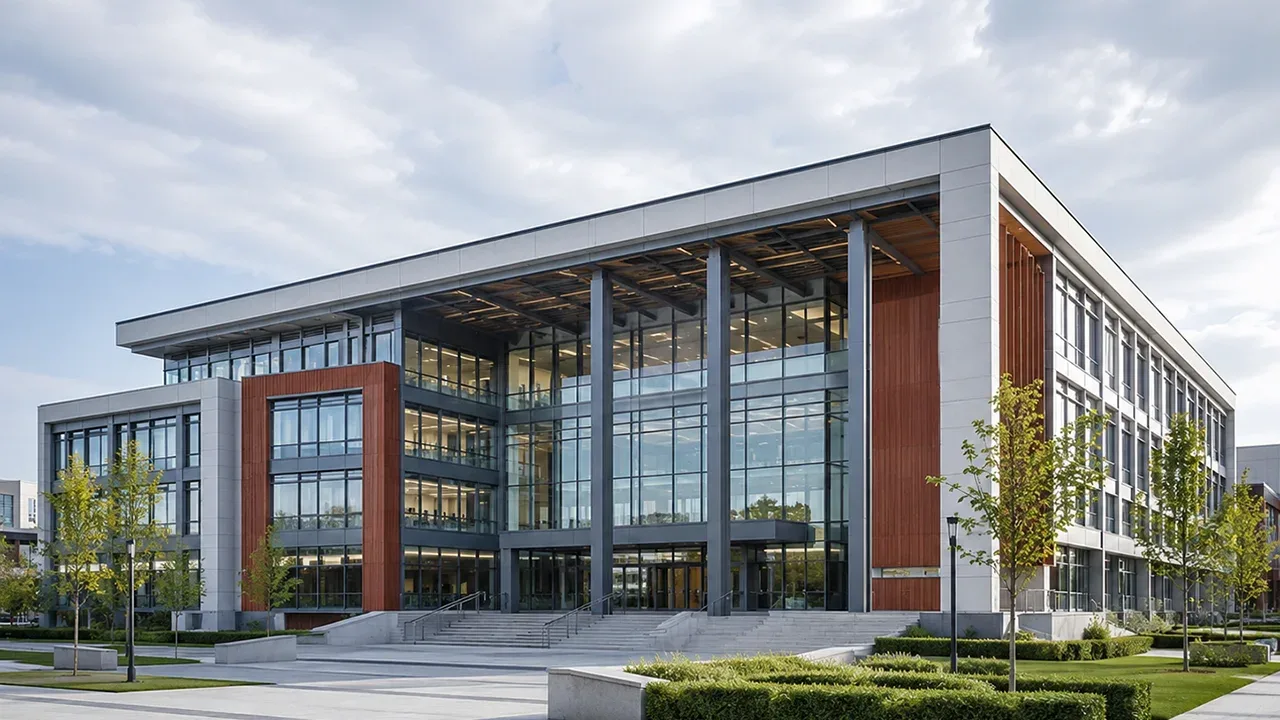
Steel systems support modern institutional architecture through clean structural lines, lightweight framing, and adaptable façade integration.
Long-Span Public Spaces
Large institutional gathering areas benefit from long-span structural systems that reduce internal obstructions and improve space usability.
Integration with Glass and Facade Systems
Steel framing can be combined with curtain walls, glass systems, and modern exterior materials to create visually distinctive institutional facilities.
Selecting a Steel Structure Partner for Institutional Projects
Institutional developments require coordinated engineering, regulatory compliance, scheduling management, and long-term structural reliability.
Choosing an experienced structural partner helps institutions improve project execution efficiency while reducing construction risks.
Frequently Asked Questions
Are steel structures suitable for institutional buildings?
Yes. Steel structures are widely used for educational, healthcare, government, and community facilities.
Can institutional steel buildings be expanded later?
Yes. Steel systems provide flexibility for future expansion and layout modification.
How long do institutional steel structures last?
With proper engineering and maintenance, steel institutional buildings can perform reliably for decades.
Supporting Modern Institutional Development
A properly designed institutional steel structure building helps organizations develop durable, adaptable, and efficient facilities for long-term public use. Steel systems support modern institutional operations while allowing flexibility for future growth and modernization.
Careful planning, engineering coordination, and quality fabrication all contribute to creating institutional environments that remain functional and structurally reliable over time.