High-Capacity Mass Production Steel Fabrication Services
A complete mass production steel fabrication service connects production engineering with manufacturing capacity. The project scope is reviewed to determine component families, material requirements, processing routes, welding workloads, inspection points, finishing systems, and delivery priorities before large-volume production advances.
This differs from simple repetitive manufacturing. A major structural steel project may contain thousands of components, but they are rarely identical. Columns may vary by load zone, rafters may change with geometry, connection plates may follow several configurations, and truss assemblies may require project-specific segmentation. Effective high-capacity production therefore combines standardization where useful with controlled flexibility where engineering requirements differ.
Production Capacity for Large Project Volumes
Large projects can involve substantial quantities of primary and secondary steelwork. Production planning must account for beams, columns, portal frame members, truss components, bracing, stiffeners, connection plates, and other fabricated assemblies without allowing one processing stage to disrupt the entire schedule.
Capacity is therefore evaluated according to more than total tonnage. Component complexity, plate thickness, drilling requirements, welding intensity, finishing specifications, and shipment deadlines all influence actual production demand.
Repeatable Output Without Losing Project Control
Where components share common characteristics, repeatable processing methods can improve efficiency. Standardized work instructions, controlled fabrication sequences, and appropriate jigs or fixtures may help maintain consistency. However, project-specific dimensions, loads, connections, and revisions must remain clearly controlled throughout production.
Scope of High-Volume Steel Fabrication
Production Engineering and Fabrication Planning
The workflow begins with a review of engineering drawings, fabrication information, component quantities, and required milestones. Large scopes can be divided into manageable production packages based on structural zones, member families, buildings, or erection priorities.
This planning stage helps define which components should move through cutting, drilling, assembly, welding, inspection, and finishing first. It also creates a practical connection between engineering information and workshop operations.
Material Procurement and Batch Allocation
Steel plates and sections must be coordinated with the production schedule. Material grades, dimensions, certificates, and identification requirements are reviewed according to project specifications. Where traceability is required, materials can be linked to defined production batches and component groups.
Cutting, Drilling, and CNC Processing
Controlled processing supports both productivity and repeatability. Depending on the component type, operations may include:
- CNC cutting and plate profiling
- Automated or controlled drilling
- Hole preparation for bolted connections
- Section cutting and end preparation
- Component marking and identification
Digital processing is particularly valuable when repeated geometries or connection patterns occur across substantial quantities of steelwork.
Welding and Assembly Operations
Components are assembled and welded according to approved fabrication information and applicable project requirements. For repeated member families, organized workstations and suitable fixtures can improve consistency while reducing unnecessary repositioning and handling.
Surface Treatment and Finishing
Finishing requirements are coordinated with production release and shipment schedules. Depending on project specifications and environmental exposure, the scope may include blasting, industrial protective coatings, anticorrosion paint systems, or galvanizing for suitable components.
Steel Components Suitable for Mass Production
Structural Beams and Columns
Large industrial and commercial projects frequently require repeated families of beams and columns. Although member sizes may vary, organized processing can group similar profiles, plate-built sections, hole patterns, and connection configurations into efficient production sequences.
Portal Frame Components
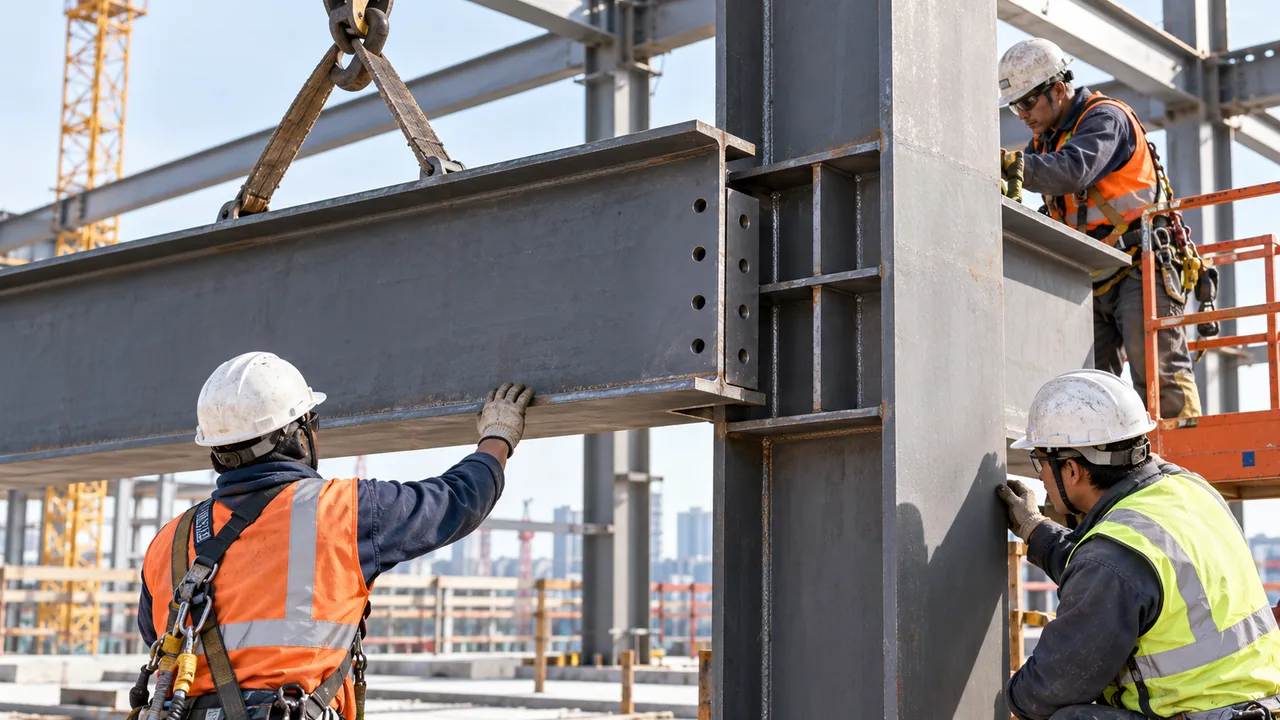
Warehouses, factories, workshops, and logistics buildings often use repeated portal frames. Columns, rafters, haunch sections, end plates, stiffeners, and associated connection components can be coordinated as production families while preserving the engineering requirements of each frame zone.
Truss Components and Assemblies
Large-span structures may require substantial quantities of chords, web members, gusset plates, nodes, and segmented assemblies. Production planning can align these elements according to truss identification, fabrication sequence, trial assembly requirements, and site installation priorities.
Bracing and Secondary Structural Components
Smaller components can represent a significant portion of the total item count. Bracing members, stiffeners, cleats, plates, supports, and other secondary elements require disciplined identification because errors in repetitive small parts can create disproportionate delays during erection.
Custom Repetitive Fabricated Assemblies
High-volume production is not limited to standardized buildings. Project-specific modules, equipment support frames, special structural assemblies, and non-standard components can also be produced in substantial quantities when engineering data and production controls are properly organized.
Applications for High-Volume Steel Fabrication
Large Industrial Developments
Manufacturing complexes, processing plants, and heavy industrial developments may require extensive structural packages delivered across several construction phases. Production can be aligned with foundations, equipment zones, process buildings, utility areas, and future milestones.
Warehouse and Logistics Projects
Large distribution centers and logistics parks frequently combine repeated portal frames with loading zones, canopies, mezzanines, equipment supports, and specialized structural areas. High-capacity fabrication helps manage both repetitive frame production and project-specific components.
Multi-Building Factory Developments
A single development may contain several workshops, production halls, warehouses, and support buildings. Components can be grouped by building number and erection zone, allowing production and delivery to follow actual construction priorities.
Infrastructure and Public Projects
Infrastructure-related structures may involve large component quantities, complex inspection requirements, and phased installation windows. Production planning must therefore account for documentation, release status, logistics, and installation sequence as well as fabrication speed.
Modular and Repetitive Building Programs
Projects based on repeated structural modules or standardized building families can benefit from organized production methods. This may include multi-site developments where similar structural packages are required for different destinations or phases.
Production Planning for Large Steel Volumes
Breaking Large Orders Into Production Batches
A major order should not move through the factory as one undifferentiated volume. Production packages can be divided by building, erection area, structural system, component family, or delivery milestone. This creates clearer priorities and makes progress easier to monitor.
Capacity Allocation Across Production Lines
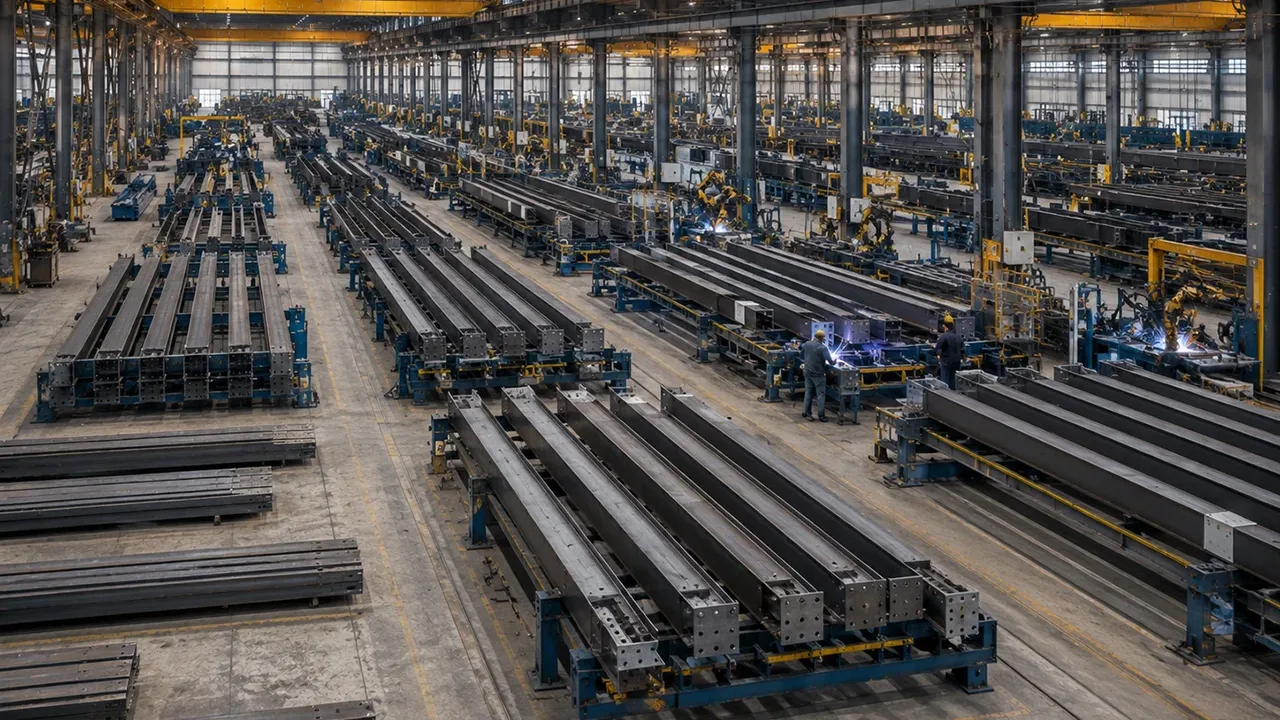
Different components place different demands on machinery and labor. Plate-intensive members may require substantial cutting capacity, while connection-heavy components can increase drilling and fitting workloads. Welded built-up sections may place greater demand on assembly and welding stations.
Balancing these requirements helps reduce bottlenecks between processing stages and supports more stable output.
Production Scheduling and Milestone Control
Daily and weekly targets can be connected to larger project milestones. Priority components, inspection releases, coating schedules, shipment dates, and site erection needs should be considered together rather than managed as unrelated activities.
CNC and Automated Processing for Repeatable Production
CNC Cutting for Consistent Geometry
CNC processing supports repeatable plate geometries and efficient material nesting. When similar components occur in significant quantities, controlled digital cutting can reduce manual variation and improve consistency between production batches.
Automated Drilling and Hole Processing
Repeated bolt patterns and connection details require accurate hole positioning. Controlled drilling processes support consistency across member families and can improve downstream fitting and site assembly.
Digital Production Data Coordination
Production efficiency depends on reliable information. Component marks, drawing references, revision status, and processing data should remain coordinated so that outdated information does not continue through a large batch. Revision control becomes increasingly important as production volume grows.
Welding and Assembly at Production Scale
Organized Workstations and Production Flow
Defined work areas can support logical movement from fitting and assembly to welding, inspection, correction where necessary, and release. Reducing unnecessary handling is particularly valuable when substantial quantities of similar components are moving through the workshop.
Jigs and Fixtures for Repeated Components
Where technically appropriate, jigs and fixtures can help maintain geometry and accelerate the positioning of repeated components. Their use should reflect actual tolerances, welding behavior, and project requirements rather than being applied automatically.
Welding Procedure Control
Large-volume output still requires disciplined welding management. Applicable procedures, welder coordination, consumable control, inspection stages, and repair processes should remain defined across production batches.
Quality Control Across Mass Production
Incoming Material Verification
Material verification may include checking grades, dimensions, identification, and supporting certificates against project requirements. Clear control at receipt reduces the risk of incorrect materials entering production.
In-Process Dimensional Inspection
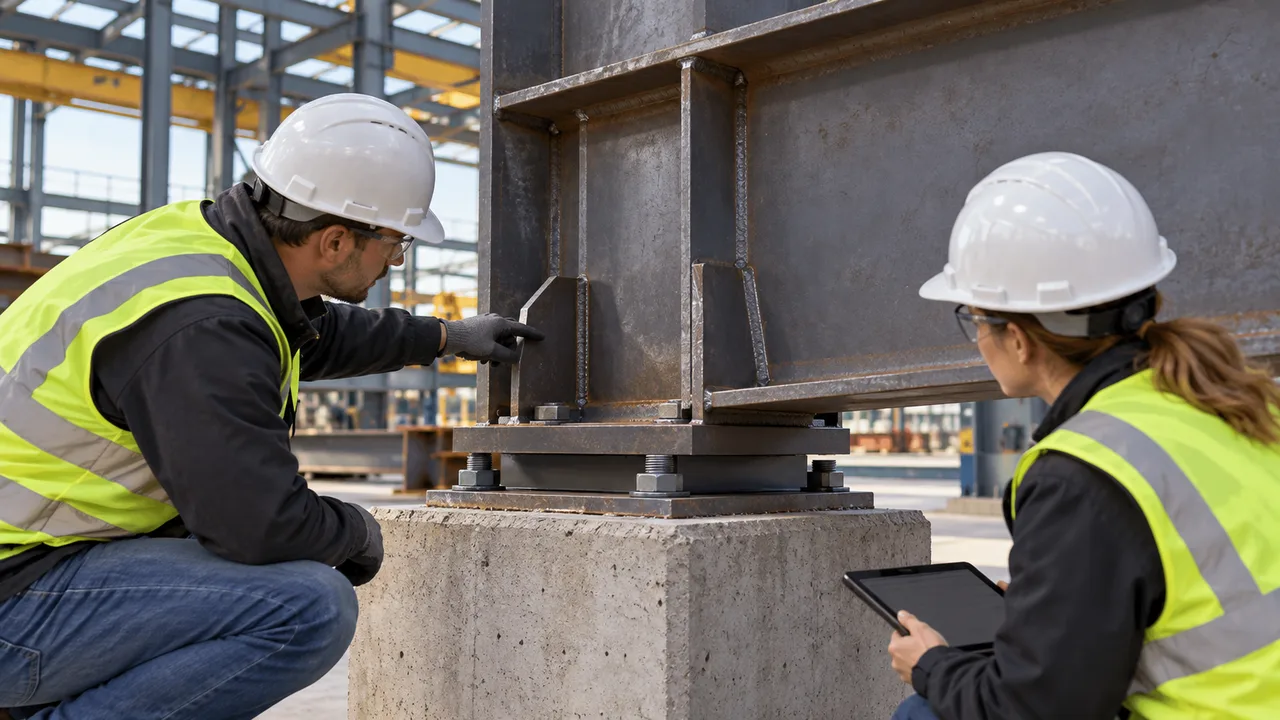
Inspection can verify member lengths, hole locations, connection geometry, assembly dimensions, and other specified tolerances. Early checks are important because a repeated dimensional error can affect many components if it is not identified quickly.
Welding Inspection
Inspection requirements depend on the project and applicable standards. The scope may include visual examination and project-required nondestructive testing where specified. Inspection status should remain connected to component or batch identification.
Batch-Level Quality Records
Quality documentation can track production status, inspection results, coating progress, and release for dispatch. This creates better visibility when several production batches are moving simultaneously.
Component Identification and Traceability
Unique Component Coding
Component marks should connect physical steelwork to approved drawings and installation information. Codes can also reflect building zones, frame lines, structural packages, or erection sequences where required.
Batch Tracking Through Production
Tracking can follow components through material preparation, fabrication, inspection, finishing, packing, and dispatch. The required level of traceability depends on contractual and technical requirements.
Reducing Errors During Site Assembly
Clear marking and organized packing help site teams identify the correct components without excessive sorting. Shipment groups can be prepared around practical installation needs rather than simply loading whichever items finish first.
Surface Treatment for Large Production Batches
Shot Blasting and Surface Preparation
Controlled surface preparation supports the specified coating system and can be organized according to production batches. Components should progress into finishing with identification and inspection status maintained.
Industrial Coating Systems
Depending on the project, protective systems may include primers, intermediate coats, and finish coats. Application requirements, dry film thickness, curing conditions, and inspection criteria should follow relevant specifications.
Galvanized Components Where Required
Hot-dip galvanizing may be specified for suitable structural or secondary components. Fabrication details, drainage, venting, component dimensions, and handling requirements should be considered before galvanizing.
Logistics and Delivery Sequencing
Production Aligned With Erection Priorities
One of the practical advantages of mass production steel fabrication is the ability to connect output with site priorities. Components for early erection zones can be prioritized while later packages continue through manufacturing.
Packing by Building or Installation Zone
Organized packing can reduce site sorting and improve receiving efficiency. Where practical, shipment packages may be grouped by building, frame line, erection area, or installation phase.
Export and International Shipping Coordination
International projects require additional planning for container dimensions, breakbulk shipment, port handling, export documentation, packing protection, and destination logistics. These requirements can influence component segmentation and dispatch planning from an early stage.
Advantages of Mass Production Steel Fabrication
A properly managed high-volume fabrication service can provide several practical advantages:
- Scalable output for large structural packages
- Repeatable processing across component families
- Improved production schedule visibility
- More efficient allocation of machinery and labor
- Consistent dimensional control
- Organized component identification and traceability
- Better coordination between fabrication and shipment
- Support for phased construction and erection priorities
The value comes from combining production scale with control. High output alone is not sufficient if components cannot be identified, inspected, delivered, and assembled according to project requirements.
Managing Capacity Without Sacrificing Flexibility
Standardization Where It Creates Efficiency
Repeated connection principles, member families, processing routes, and work instructions can improve productivity where the engineering allows them. Standardization is most useful when it simplifies production without overriding project-specific performance requirements.
Customization Where the Project Requires It
Different spans, loading conditions, crane zones, equipment interfaces, and special structural areas may require unique members or connections. A high-capacity production system must accommodate these differences without losing control of the broader schedule.
Handling Design Revisions During Production
Revisions can create significant risk when large quantities are already in progress. Effective revision control should identify affected drawings and batches, isolate outdated information, and communicate approved changes before additional components are processed.
Project Schedule and Production Risk Control
Identifying Bottlenecks Before Fabrication Starts
Potential constraints may include machine capacity, complex welding workloads, limited coating throughput, special material availability, inspection hold points, or shipping restrictions. Early identification allows the production plan to respond before these issues disrupt critical milestones.
Coordinating Procurement With Production Demand
Material availability must support the intended fabrication sequence. Critical steel grades, plate thicknesses, and section sizes can be prioritized according to production needs to reduce avoidable interruptions.
Monitoring Progress Against Delivery Milestones
Progress should be evaluated beyond fabricated tonnage alone. Inspection release, finishing completion, packing readiness, and dispatch status all influence whether a production package is genuinely ready to support the project schedule.
Why Choose a High-Capacity Steel Fabrication Partner
Scalable Manufacturing Infrastructure
A capable partner should have processing resources appropriate for the expected component mix, including material preparation, cutting, drilling, assembly, welding, handling, inspection, and finishing capabilities.
Engineering and Production Coordination
Large-volume fabrication requires more than workshop equipment. Engineering information must be translated into practical production sequences, with component complexity, revisions, and delivery priorities managed throughout the workflow.
Quality Systems for Repetitive Output
Inspection discipline, identification, traceability, and documentation become increasingly important as volume rises. The production system should be capable of detecting issues before they repeat across substantial quantities.
International Project Delivery Experience
Export projects require coordination between fabrication, packing, shipping, documentation, and destination requirements. Experience with phased international delivery can help align factory output with practical logistics.
XTD Steel Structure supports large-volume structural steel projects through coordinated engineering, fabrication planning, production, quality control, and delivery management. The service is structured around actual project requirements rather than production volume alone, helping clients connect manufacturing capacity with defined construction milestones.
Frequently Asked Questions
What is mass production steel fabrication?
It is the organized high-volume fabrication of structural steel components through coordinated production planning, material processing, assembly, welding, inspection, finishing, and delivery. The components may be repetitive, varied, or a combination of both.
Is mass production only suitable for standardized steel components?
No. Standardized components can benefit from repeatable processing, but project-specific members and custom assemblies can also be manufactured at scale when engineering information, batch control, and production routes are properly managed.
How is quality maintained across large production volumes?
Quality can be managed through material verification, controlled processing, dimensional inspection, welding inspection, component coding, traceability, documentation, and defined release stages.
Can production be coordinated with site erection schedules?
Yes. Production batches can be prioritized according to buildings, erection zones, structural packages, or delivery milestones so that fabrication output supports actual site requirements.
Is the service suitable for international projects?
Yes. International delivery can include export-oriented packing, shipment planning, container or breakbulk coordination, documentation, and dispatch sequencing based on destination and installation requirements.
Start Your Mass Production Steel Fabrication Project
A coordinated mass production steel fabrication strategy can help large projects convert substantial steel requirements into manageable production batches with clearer control over quality, progress, traceability, and delivery. The right approach considers not only total tonnage but also component complexity, processing demand, inspection requirements, finishing systems, shipping constraints, and erection priorities.
For industrial complexes, logistics developments, multi-building factories, infrastructure programs, or repetitive construction projects, early evaluation of the component mix and delivery milestones can establish a more practical production strategy. By aligning manufacturing capacity with actual project sequencing, large-volume steel fabrication can support scalable output without losing the flexibility required by project-specific engineering.