Functional Advantages of Steel Garage Buildings
Faster Construction for Garage Projects
Steel garage buildings are typically fabricated in a workshop and assembled on-site. This shortens the overall construction period and helps reduce disruption at residential, commercial, or industrial sites.
- Factory-made structural components
- Reduced wet construction work
- Faster on-site assembly
- More predictable project scheduling
Clear Span Interior Space
Many garage projects require open interiors for vehicle movement, parking, maintenance, and equipment storage. Steel framing can create wide clear spans with fewer internal columns, making the space easier to use.
Long-Term Structural Durability
A properly designed steel garage can resist wind, rain, corrosion, and daily operational use. With suitable coatings and protective treatments, the structure can remain stable and functional for many years.
Lower Maintenance Requirements
Steel garages are relatively easy to maintain compared with many conventional structures. Regular inspection of coatings, drainage, fasteners, and doors is usually enough to keep the building in good condition.
Types of Steel Structure Garage Buildings
Residential Garage Buildings
Residential steel garages are used for private vehicle storage, workshops, hobby spaces, and detached garage buildings. They can be designed with single-bay, double-bay, or multi-bay layouts depending on the owner’s needs.
Commercial Garage Facilities
Commercial garages are often used by transportation companies, service centers, rental fleets, and logistics businesses. These buildings require stronger planning around traffic flow, door placement, internal clearance, and working zones.
Industrial Equipment Garages
Industrial and agricultural users often need garages for trucks, forklifts, tractors, construction machinery, or service vehicles. A steel structure garage building can be customized with higher roof clearance and heavier structural capacity for these applications.
Multi-Bay Steel Garage Structures
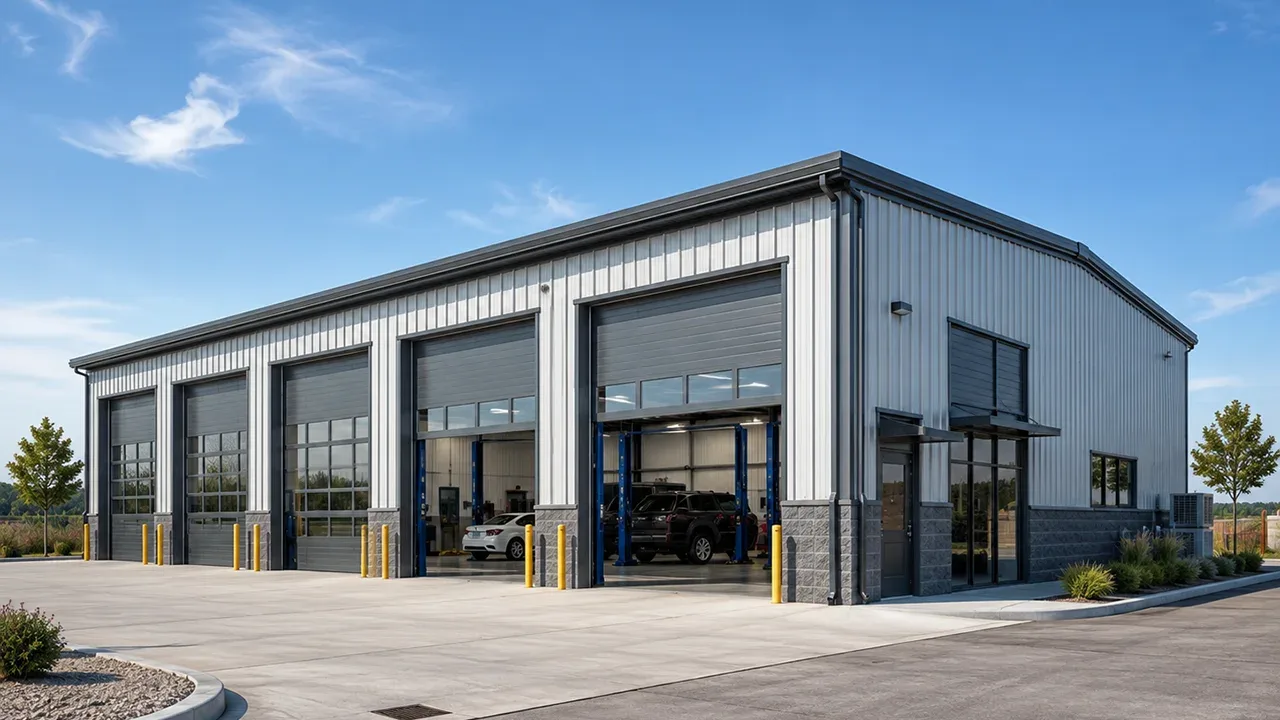
Multi-bay garages are suitable for organizations that need to store or service multiple vehicles at the same time. The layout can include several access doors, separated bays, maintenance areas, and tool storage zones.
Design Features for Modern Steel Garages
Vehicle Access and Internal Clearance
Garage design should begin with the dimensions of the vehicles or equipment that will use the building. Door height, turning radius, roof clearance, and bay depth all influence the final structural layout.
| Design Feature | Purpose |
|---|---|
| Wide access doors | Improves vehicle entry and exit |
| Clear span layout | Creates flexible parking and working space |
| Higher roof clearance | Supports trucks, machinery, or lifting equipment |
| Drainage planning | Protects the floor and structure from water damage |
Roof and Drainage Systems
Roof slope, gutter placement, and drainage planning are important for garage durability. Water should be directed away from doors, foundations, and working areas to reduce long-term maintenance problems.
Ventilation and Lighting Integration
Garage buildings may need natural ventilation, mechanical exhaust systems, skylights, wall openings, or LED lighting depending on how the space will be used. Maintenance garages and repair areas especially need proper air circulation.
Expansion and Future Modification Potential
One benefit of steel construction is the ability to plan for future extension. Additional bays, longer building length, or upgraded wall systems can often be considered during the initial design stage.
Applications Across Different Industries
Residential Use
Homeowners use steel garages for vehicle storage, small workshops, motorcycles, boats, and personal equipment. The design can be simple or architectural depending on the property style.
Logistics and Transportation Companies
Fleet operators require garage facilities for vehicle parking, inspection, light maintenance, and dispatch operations. Steel buildings support these needs with large spans and efficient layouts.
Agricultural Equipment Storage
Farms often require durable garages for tractors, harvesters, trailers, and spare equipment. Steel garages are suitable because they can provide wide openings and strong weather protection.
Municipal and Public Vehicle Facilities
Municipal departments may use steel garages for emergency vehicles, maintenance trucks, buses, or public service equipment. These projects often require reliable structural performance and long-term usability.
Steel Fabrication and Garage Construction Workflow
Structural Steel Processing
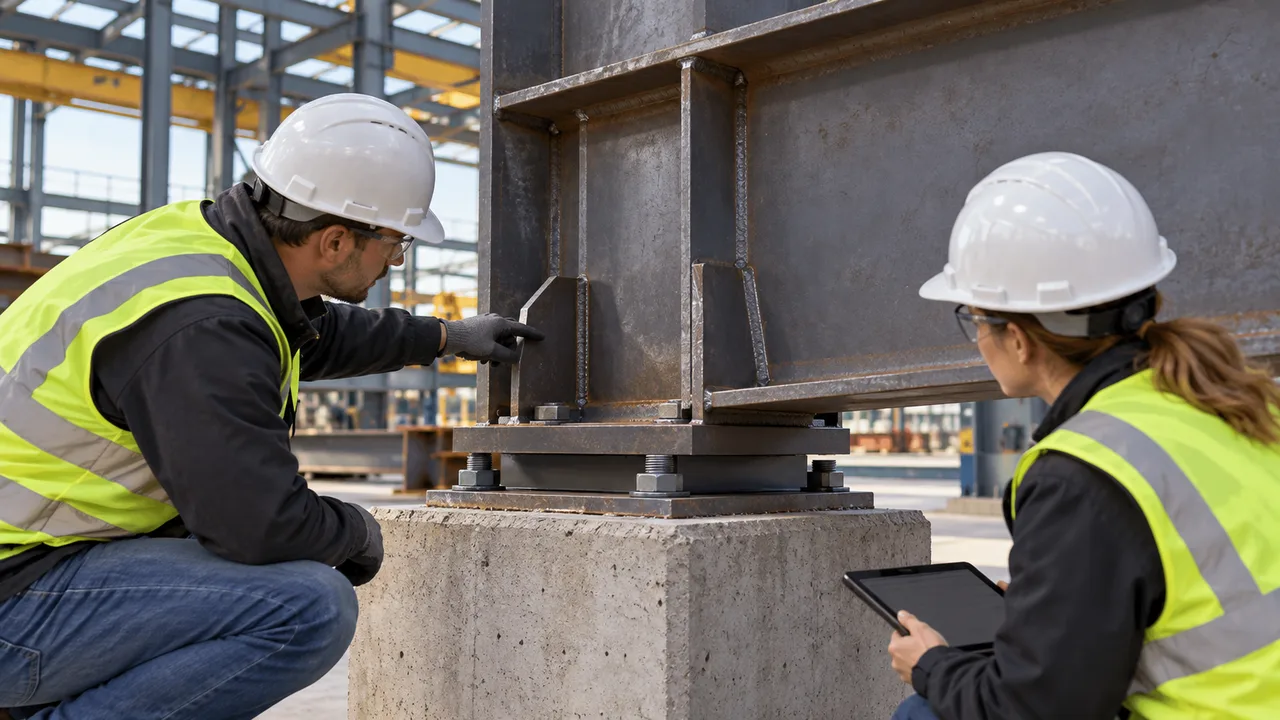
The fabrication process includes cutting, drilling, welding, and assembling steel components according to engineering drawings. Precision fabrication helps ensure smooth installation once the components reach the site.
Prefabrication Benefits
- Better dimensional control
- Cleaner on-site construction
- Reduced installation time
- More consistent component quality
Transportation and Site Installation
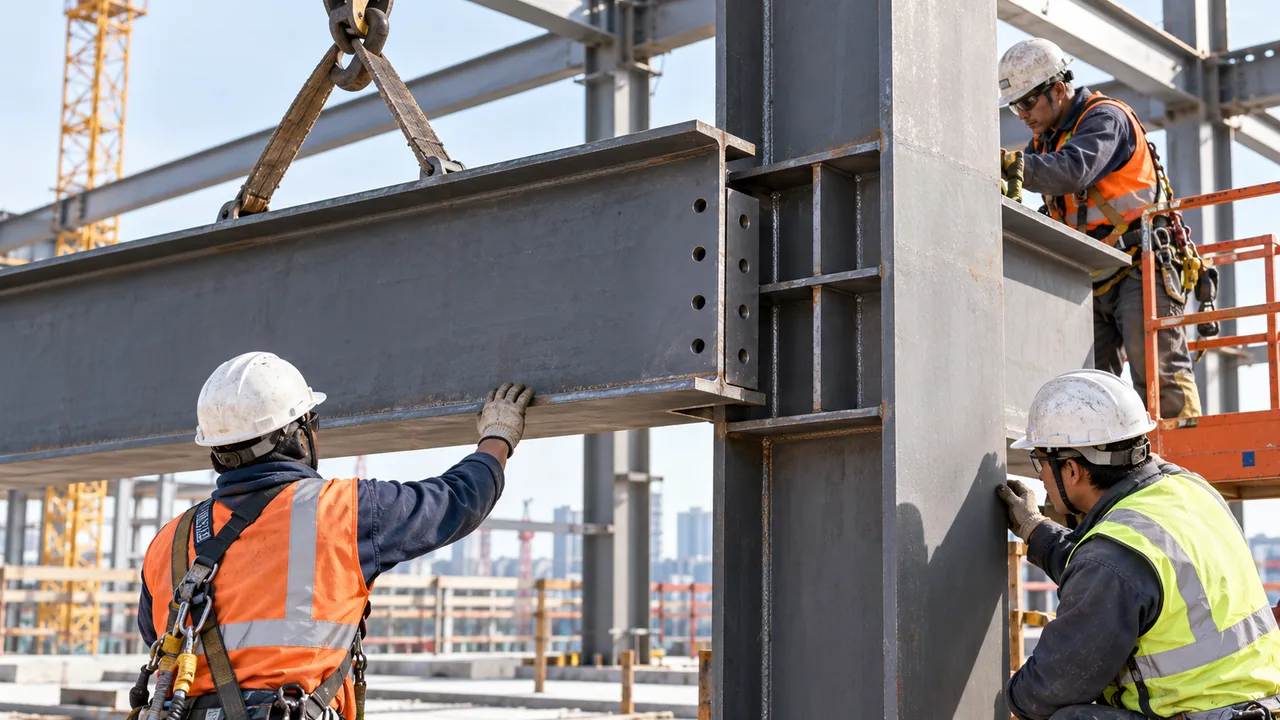
After fabrication, structural components are packed and transported to the project site. Installation teams assemble the frame, align structural members, complete connections, and coordinate roof and wall enclosure work.
Why Steel Performs Well for Garage Buildings
Garage buildings must handle repeated vehicle movement, changing weather, and practical day-to-day use. Steel performs well because it combines strength with layout flexibility. It can support wide openings, large doors, higher roofs, and future modifications without making the structure overly complex.
For garage projects where speed, durability, and usable interior space matter, steel is often one of the most practical structural choices.
With suitable surface treatment, steel garages can also provide good corrosion resistance and long service life. This makes them valuable for both private owners and commercial operators who need reliable space without excessive maintenance.
Choosing the Right Steel Garage Building Supplier
The right supplier should understand both structural engineering and the practical requirements of garage use. A garage is not only a building shell; it must work smoothly for vehicles, people, tools, doors, lighting, ventilation, and future operation.
Important supplier capabilities include fabrication quality, engineering support, project coordination, coating options, and installation experience. XTD Steel Structure supports steel building projects with integrated design, fabrication, and delivery capabilities for different garage applications.
Common Questions About Steel Garage Buildings
How long does steel garage construction take?
The timeline depends on size, design complexity, and site conditions, but prefabricated steel garages are generally faster to complete than many traditional building systems.
Can steel garages support large vehicles?
Yes. Steel garage buildings can be designed with higher clearance, wider doors, and stronger framing for trucks, machinery, fleet vehicles, and industrial equipment.
Are steel garage buildings customizable?
Yes. Layout, bay quantity, door position, roof system, wall panels, ventilation, insulation, and future expansion options can be customized based on project needs.
Build a Reliable Steel Garage Facility
A well-planned steel structure garage building provides durable protection, flexible interior space, and efficient construction for residential, commercial, agricultural, and industrial vehicle storage needs.
By planning the structure around real vehicle access, internal workflow, weather protection, and long-term maintenance, steel garage buildings can deliver dependable performance for many years.