What Is Warehouse Steel Structure Construction?
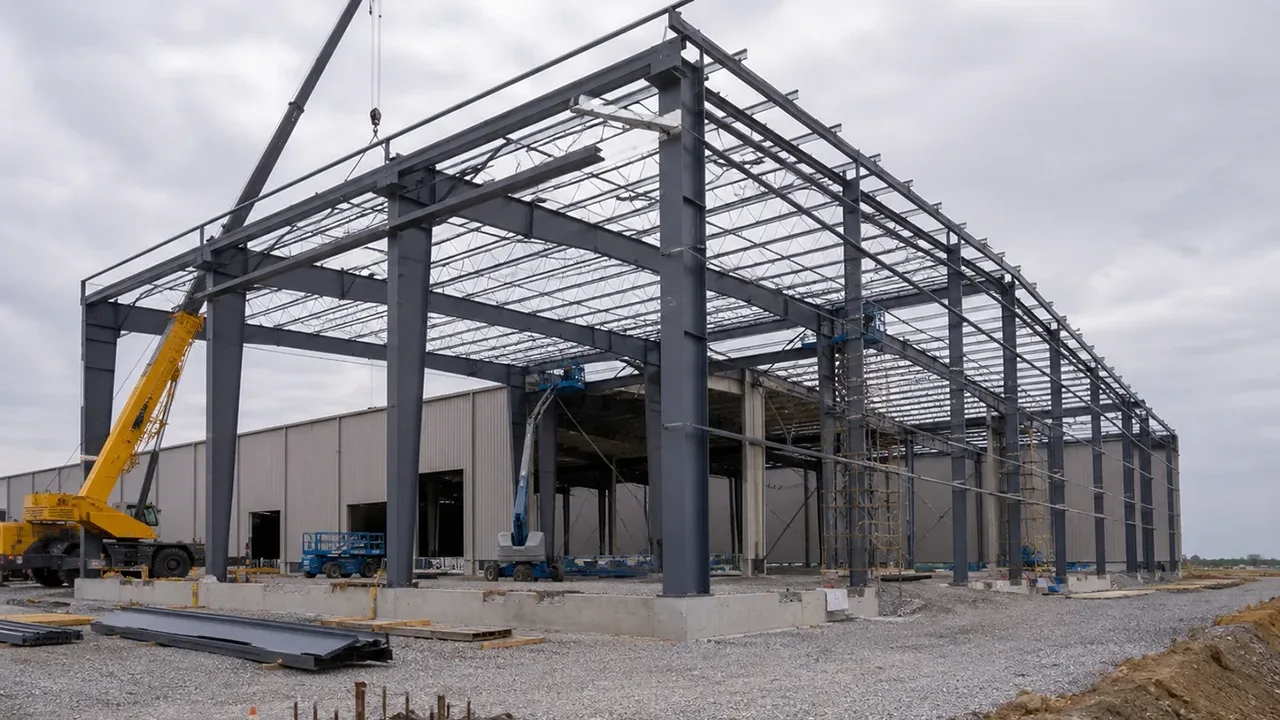
Warehouse steel structure construction refers to the planning, engineering, fabrication, and erection of steel-framed warehouse buildings. These structures are designed to provide large unobstructed interior spaces while maintaining structural strength, operational efficiency, and long-term durability.
Unlike traditional construction systems that may require extensive internal supports, steel structures can achieve wide spans and flexible layouts that maximize usable storage space.
The construction process typically combines engineering design, factory fabrication, site preparation, foundation construction, steel erection, enclosure installation, and final commissioning activities.
Key Components of Warehouse Steel Structure Construction
Primary Structural Frame
The primary frame serves as the main load-bearing system of the warehouse. It transfers roof loads, wind forces, operational loads, and other structural demands safely to the foundation.
Typical primary frame components include:
- Steel columns
- Steel rafters
- Portal frame systems
- Rigid frame connections
- Main structural supports
These components form the structural backbone of the warehouse building.
Secondary Structural Members
Secondary framing elements support the building envelope and help distribute loads throughout the structure.
Common secondary members include:
- Roof purlins
- Wall girts
- Bracing systems
- Eave struts
- Support members
Proper design of secondary framing contributes to overall structural performance and stability.
Building Envelope Systems
The building envelope protects warehouse operations from environmental conditions and contributes to energy efficiency.
Warehouse envelope systems typically include:
- Metal roof panels
- Wall cladding systems
- Insulation packages
- Ventilation systems
- Weatherproofing components
The selection of appropriate enclosure systems depends on climate conditions and operational requirements.
Types of Warehouse Projects
Logistics Warehouses
Logistics facilities are designed to support distribution, transportation, and inventory management activities. These warehouses often require large clear-span spaces, multiple loading docks, and optimized circulation patterns.
Steel structures allow operators to maximize storage capacity while maintaining efficient material flow throughout the facility.
Industrial Storage Warehouses
Industrial storage warehouses are commonly used to store raw materials, equipment, finished products, and production-related inventory.
These facilities often require higher load capacities and specialized layouts that support manufacturing operations.
Cold Storage Warehouses
Cold storage applications require insulated building systems capable of maintaining controlled temperatures. Steel structures provide strong support for insulated wall and roof systems while enabling efficient space utilization.
Cold storage facilities are frequently used in food processing, agriculture, pharmaceutical storage, and temperature-sensitive logistics operations.
Multi-Purpose Storage Buildings
Many organizations require flexible warehouse facilities capable of adapting to changing operational requirements.
Steel-framed buildings offer the flexibility needed for storage, distribution, production support, and mixed-use applications within a single structure.
Planning a Warehouse Steel Structure Construction Project
Site Evaluation
Successful warehouse projects begin with a comprehensive site evaluation. Understanding site conditions helps engineers develop efficient foundation systems and construction plans.
Important considerations include:
- Soil conditions
- Groundwater levels
- Site accessibility
- Drainage requirements
- Future expansion opportunities
Early planning helps reduce construction risks and improve project efficiency.
Building Size and Layout
Warehouse design should align with operational objectives. Building dimensions directly affect storage capacity, equipment movement, and overall productivity.
Key planning factors include:
- Clear span requirements
- Building height
- Storage system configuration
- Loading dock requirements
- Traffic flow patterns
Optimizing these factors can significantly improve warehouse performance.
Structural Design Considerations
Warehouse steel structures must be engineered to withstand environmental and operational loads throughout their service life.
Design considerations typically include:
- Wind loads
- Snow loads
- Seismic requirements
- Equipment loads
- Future expansion loads
Accurate engineering analysis ensures safety, durability, and regulatory compliance.
Warehouse Steel Structure Construction Process
Engineering and Design
The construction process begins with engineering development. Structural calculations, layout planning, and shop drawings are prepared to support fabrication and construction activities.
Many modern projects also utilize BIM coordination to improve communication among stakeholders and reduce potential conflicts during construction.
Fabrication and Manufacturing
Following design approval, structural components are manufactured in controlled factory environments.
Fabrication activities typically include:
- Material procurement
- CNC cutting
- Drilling operations
- Welding and assembly
- Quality inspections
- Surface treatment
Factory production improves consistency and reduces site-related fabrication challenges.
Site Preparation and Foundation Work
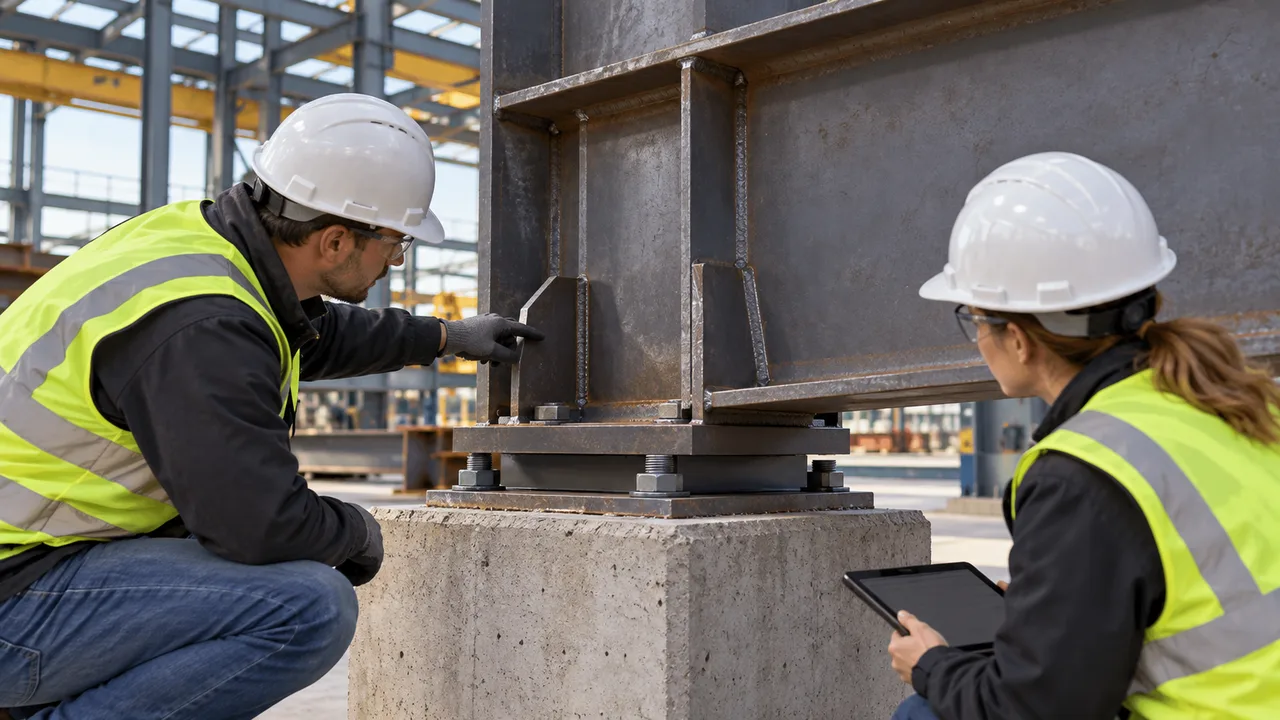
While fabrication is underway, site preparation activities begin. This phase includes grading, utility installation, foundation construction, and anchor bolt placement.
Accurate foundation work is critical because it directly affects the alignment and erection of the steel structure.
Steel Structure Erection
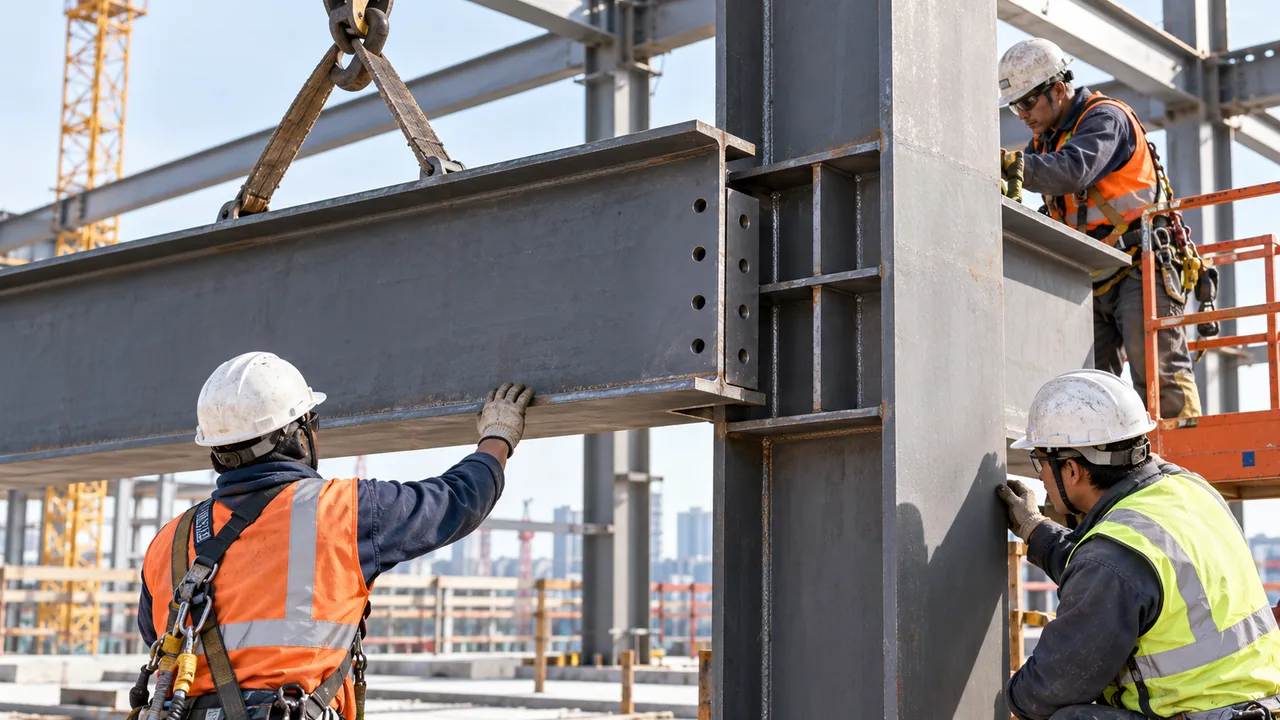
After foundation completion, steel erection begins. Structural frames are assembled according to approved construction procedures.
The erection sequence generally includes:
- Column installation
- Rafter installation
- Bracing installation
- Roof framing completion
- Wall framing installation
Careful erection planning improves safety and construction efficiency.
Quality Control During Construction
Material Inspection
Quality control starts with verification of incoming materials. Inspection procedures help confirm compliance with project specifications and quality standards.
Material traceability systems are often implemented to support quality assurance programs.
Fabrication Quality Control
Fabrication quality directly influences installation efficiency and long-term building performance.
Quality control activities may include:
- Dimensional verification
- Welding inspection
- Surface treatment inspection
- Documentation review
These procedures help ensure manufacturing consistency.
Site Construction Quality Management
Construction teams perform inspections throughout the erection process to verify structural alignment, bolt installation, connection integrity, and overall construction quality.
Final inspections help confirm that the completed structure satisfies engineering requirements.
Advantages of Warehouse Steel Structure Construction
Faster Construction Schedule
Prefabricated components significantly reduce on-site construction time. Since many fabrication activities occur simultaneously with site preparation, overall project schedules can be shortened considerably.
Faster completion allows facilities to become operational sooner.
Large Clear Span Space
Steel structures can achieve wide spans with minimal interior columns. This provides warehouse operators with maximum flexibility for storage layouts, automation systems, and material handling equipment.
Clear-span designs improve operational efficiency and space utilization.
Scalability and Expansion
Business needs often change over time. Steel warehouse systems can be designed to accommodate future building extensions and operational growth.
This scalability helps protect long-term investments and supports business expansion strategies.
Long-Term Durability
Properly fabricated and protected steel structures provide excellent durability and long service life.
Protective coatings, galvanization systems, and quality construction practices help maintain structural performance under demanding operating conditions.
Industries Using Warehouse Steel Structure Construction
Logistics and Distribution
Distribution centers and logistics operators utilize steel warehouses because of their operational flexibility and efficient space utilization.
Manufacturing
Manufacturers often require warehouse facilities for raw material storage, finished product inventory, and production support operations.
Retail and E-Commerce
Retail distribution networks and e-commerce fulfillment centers depend on large warehouse facilities to support inventory management and order processing.
Agriculture and Food Storage
Agricultural producers and food processing companies use warehouse structures for product storage, equipment protection, and temperature-controlled operations.
Third-Party Logistics Providers
Third-party logistics companies require adaptable warehouse environments capable of supporting multiple clients and varying operational requirements.
Why Choose XTD Steel Structure
Integrated Engineering and Construction Support
XTD Steel Structure provides comprehensive support covering engineering, fabrication, logistics coordination, and construction assistance for warehouse projects.
Advanced Fabrication Facilities
Modern manufacturing equipment, CNC processing systems, and strict quality control procedures help ensure consistent component quality.
International Project Experience
With extensive experience in global markets, XTD Steel Structure supports warehouse developments across a wide range of industries and geographic regions.
Quality-Focused Project Delivery
Every phase of warehouse steel structure construction is managed with a focus on quality, safety, efficiency, and long-term structural performance.
Frequently Asked Questions
What is warehouse steel structure construction?
It is the process of designing, fabricating, and erecting steel-framed warehouse buildings for storage, logistics, and industrial applications.
How long does warehouse construction take?
Project duration depends on building size, complexity, site conditions, and logistics requirements, but steel structures typically offer faster schedules than conventional methods.
What span can a steel warehouse achieve?
Steel warehouses can achieve large clear spans that reduce the need for interior columns and maximize usable storage space.
Can warehouse steel structures be expanded later?
Yes. Many steel warehouse systems can be designed with future expansion in mind, allowing additional bays or building extensions when required.
Start Your Warehouse Construction Project
Warehouse steel structure construction provides an efficient solution for organizations seeking durable, scalable, and cost-effective storage facilities. Through professional engineering, precision fabrication, and coordinated construction management, steel warehouse buildings can support a wide range of operational requirements.
Partnering with an experienced contractor and manufacturer helps ensure reliable quality, efficient project execution, and long-term value for warehouse developments of every size.