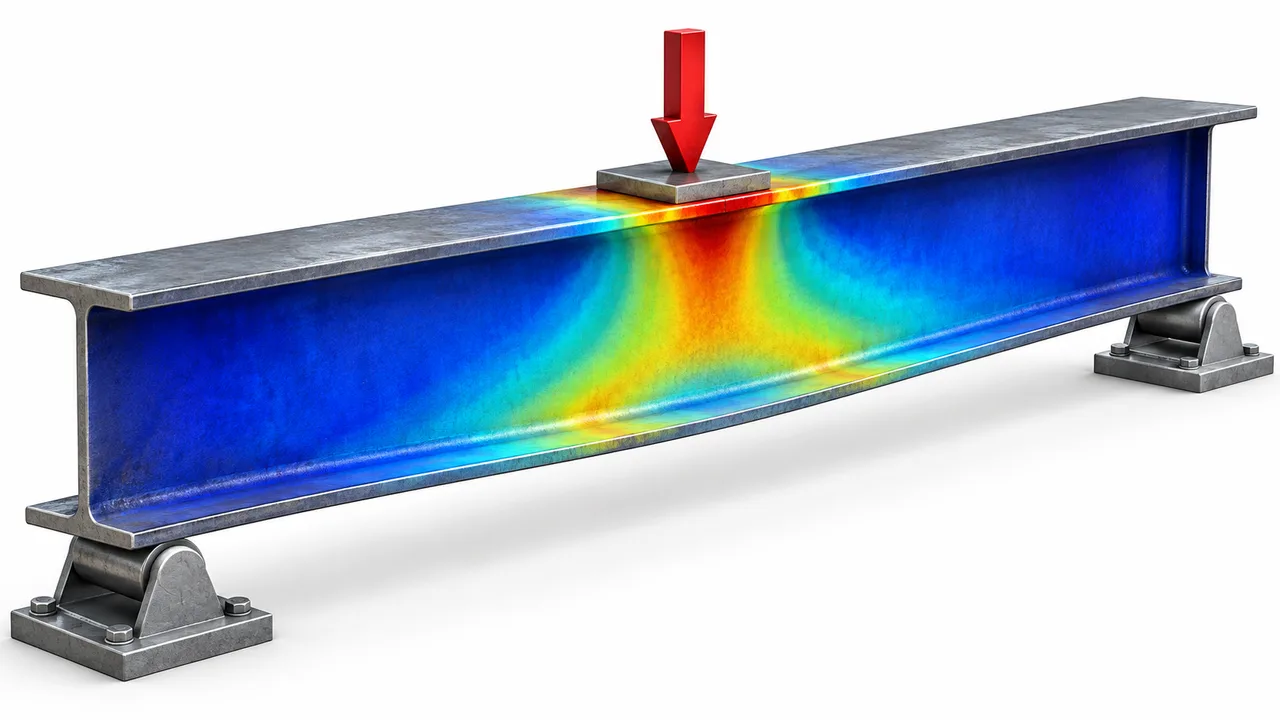
A steel beam can have more than enough bending strength and still develop a serious local problem near a support or concentrated load. When a large reaction enters the beam through a relatively short contact area, the web must transfer that force through a narrow region. If the web is thin, highly stressed, or insufficiently supported, localized deformation can govern the design before the overall beam reaches its flexural capacity.
This is why web crippling bearing length deserves attention during beam selection and connection detailing. Bearing length influences how a concentrated reaction spreads through the flange and into the web. A short bearing area can create severe localized compression, while a longer bearing area allows the force to engage a wider portion of the web.
Web crippling must also be distinguished from web local yielding. Both can occur near concentrated loads and supports, but they represent different limit states and require separate verification. The final detail may depend on bearing length, web thickness, flange stiffness, support location, bearing plates, transverse stiffeners, and the complete load-transfer path.
What Is Web Crippling in a Steel Beam?
web crippling is a localized web limit state that can occur where a concentrated force or support reaction enters a steel beam. Instead of the entire beam failing globally, a relatively small region of the web may deform, buckle, fold, or lose its ability to transfer the concentrated force effectively.
Typical locations include:
- Beam end supports
- Column or bracket reactions
- Concentrated equipment loads
- Secondary beam reactions transferred into a girder
- Bearing seats
- Transfer points between structural members
The problem is especially important when the beam has a relatively slender web and the load is introduced over a short distance. The flange initially helps distribute the force, but the web ultimately has to carry that concentrated load into the rest of the section.
Web crippling should not be treated as simply a material crushing problem. Local instability, web geometry, restraint, flange behavior, and the position of the load all influence resistance.
Where Web Crippling Typically Occurs
At an end support, a large beam reaction may be transferred through a bearing plate, column seat, concrete support, masonry wall, or another structural component. If the contact length is limited, the reaction becomes highly concentrated.
Interior concentrated loads create a different condition because the web has material available on both sides of the applied force. This difference affects how the load spreads and how the local web region behaves.
Heavy equipment supports, transfer beams, industrial platforms, and beams carrying reactions from other structural members can all require careful local web checks even when the overall beam section appears substantial.
Why Bearing Length Matters in Web Crippling Design
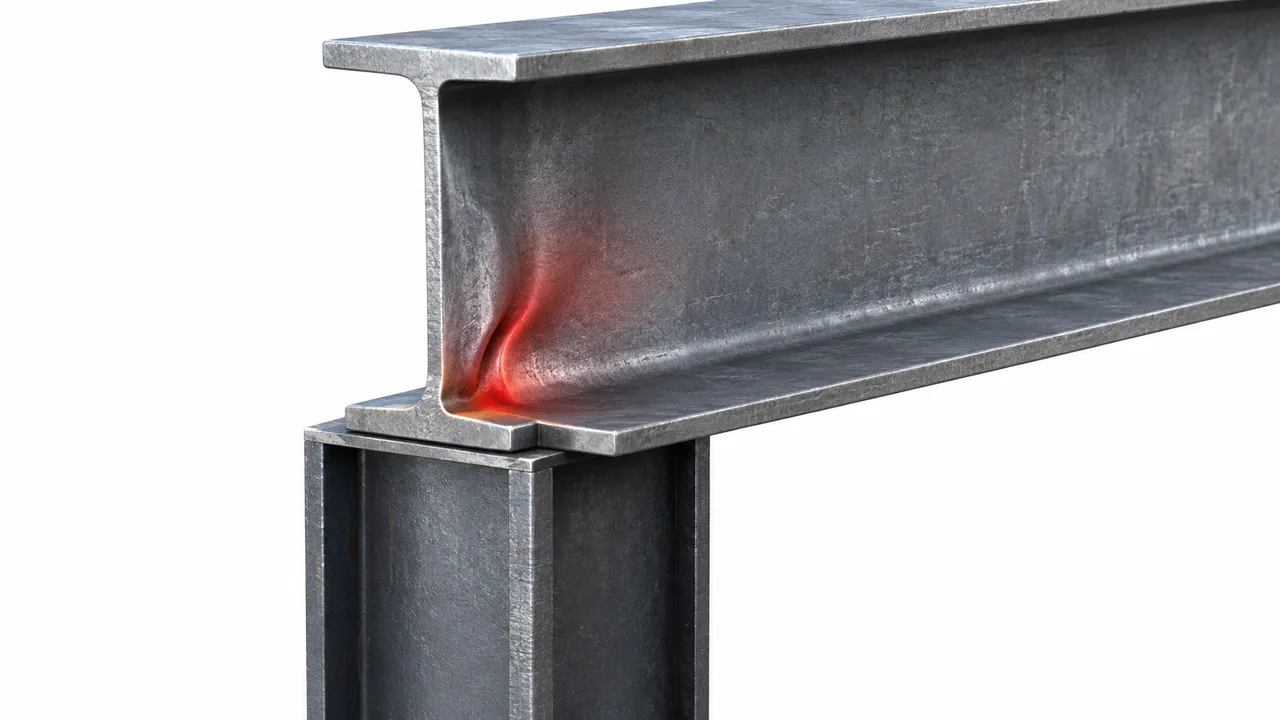
Bearing length is the length over which a concentrated force is physically introduced into the beam. It may be established by a support seat, bearing plate, connected member, column flange, bracket, or other load-transfer component.
The relationship between web crippling bearing length and local capacity is important because increasing the contact length generally allows the reaction to spread through a larger region of the flange and web.
A longer bearing length can:
- Reduce the concentration of local compressive stress
- Engage a larger portion of the web
- Improve local load distribution
- Reduce the severity of web deformation
- Increase resistance to certain localized limit states
However, the relationship is not simply proportional. Doubling the bearing length does not automatically double web crippling resistance. Beam geometry, web thickness, flange thickness, steel strength, distance from the beam end, support conditions, and the applicable design equations all influence the result.
Short Bearing Length
A short bearing length introduces the load through a relatively narrow region. This can result in high local stresses and steep stress gradients near the loaded flange.
Possible consequences include:
- Localized web deformation
- Higher web yielding demand
- Greater susceptibility to local instability
- Flange deformation near the load
- Need for a larger bearing plate
- Need for transverse bearing stiffeners
Short bearing conditions are common where architectural or connection geometry limits the available support width. They can also occur when equipment reactions are transferred through compact base plates or brackets.
Longer Bearing Length
Increasing the bearing length allows the concentrated reaction to enter the beam over a wider region. More of the flange and web can participate in distributing the force.
This does not mean designers should simply make every bearing plate as long as possible. A longer plate may add material, interfere with connections, require additional welding, or create fabrication issues without providing a proportional structural benefit.
The bearing length should therefore be selected as part of the complete support detail rather than treated as an isolated dimension.
Bearing Length at End Reactions vs Interior Loads
The location of the concentrated force is just as important as its magnitude. A reaction applied near the end of a beam behaves differently from the same force applied well inside the span.
End Bearing Conditions
At an end support, the beam web has less surrounding material available to distribute the concentrated reaction. The force is introduced close to the physical termination of the member, which changes the local stress field and instability behavior.
Typical end-bearing situations include:
- A beam seated on a steel column
- A beam supported by a bracket
- A beam bearing on concrete
- A beam bearing on masonry
- A girder supported on an end seat
Because the reaction is close to the end of the beam, an end condition can be more critical than a similar interior concentrated load.
The actual support length must be established from the connection geometry. Designers should not automatically assume that the full width of a support component acts as effective bearing if only part of the surface is actually in contact.
Interior Bearing Conditions
An interior concentrated load acts away from the member end. In this situation, the web continues on both sides of the load, providing a different load-distribution mechanism.
Examples include:
- A secondary beam framing into a girder
- An equipment support located along the beam span
- A column reaction applied to a transfer girder
- A suspended structural frame supported at an intermediate point
Interior and end loading conditions should therefore be identified correctly before evaluating local web capacity. Design standards commonly distinguish between these conditions because the surrounding geometry affects the response of the web.
Parameters That Control Web Crippling Capacity
No single dimension controls web crippling resistance. The beam web, flange, bearing condition, material properties, and load location interact.
Web Thickness
Web thickness is one of the most influential geometric parameters. A thicker web generally provides greater resistance to localized compression and instability because more material is available to transfer the reaction.
A thin web may be efficient for overall beam bending while remaining vulnerable to local concentrated forces. This is one reason a deeper or lighter beam is not automatically suitable for a heavy support reaction.
Web Depth and Slenderness
Web depth affects the geometry of the local load path. Deep, slender webs can be more sensitive to local instability than compact webs.
Web depth should therefore be considered together with thickness rather than evaluated independently. Two beams with similar overall flexural strength can behave differently under the same concentrated reaction if their web proportions are different.
Flange Thickness and Stiffness
The loaded flange helps spread the reaction before it enters the web. A thicker or stiffer flange may distribute the force differently from a thinner flange.
Local flange deformation can affect how uniformly the force reaches the web. A theoretically long bearing plate may provide less benefit if the plate or flange deforms enough to produce uneven contact.
Bearing Length
Bearing length directly affects the zone through which the concentrated force enters the beam. It is also one of the parameters that can sometimes be adjusted without changing the primary beam section.
Increasing the support seat or bearing plate length may improve local capacity when enough physical space is available.
Steel Yield Strength
Material strength affects resistance to local yielding, but higher yield strength alone does not eliminate the possibility of instability. A slender web can still require crippling checks even when high-strength steel is used.
Material strength, section geometry, and local stability should therefore be considered together.
Distance From the Beam End
The distance between the concentrated load and the beam end influences whether the condition behaves as an end reaction or an interior load.
This parameter affects how much surrounding web is available to participate in load distribution and should be established from the actual structural detail rather than from a simplified beam diagram alone.
Web Crippling vs Web Local Yielding
Web crippling and web local yielding are related because both occur around concentrated forces, but they should not be treated as the same design check.
| Design Check | Web Local Yielding | Web Crippling |
|---|---|---|
| Main behavior | Localized material yielding | Localized instability and deformation |
| Typical location | Support or concentrated load | Support or concentrated load |
| Major influences | Web area resisting concentrated compression | Web geometry, slenderness, flange behavior, and bearing condition |
| Effect of bearing length | Changes the region available to distribute compression | Can significantly affect localized stability and deformation |
| Possible improvement | Increase bearing area, increase web thickness, or add stiffeners | Increase bearing area, use a thicker web, or add stiffeners |
A beam that passes a local yielding check does not automatically satisfy web crippling requirements. Likewise, increasing bearing length enough to improve one limit state does not guarantee that every other local limit state is acceptable.
The support detail should be evaluated as a complete load-transfer system. For additional general steel design resources and industry references, designers can also consult the American Institute of Steel Construction.
How Bearing Plates Affect Web Crippling
A bearing plate is one of the most practical ways to modify the way a concentrated reaction enters a beam. By increasing the physical contact area, the plate can spread the force over a greater length of the flange and reduce the severity of localized loading.
The effectiveness of the plate depends on more than its plan dimensions. Plate thickness, stiffness, flatness, support geometry, weld details, and actual contact all influence load distribution.
A large plate that bends significantly may not distribute the reaction as evenly as expected.
Increasing Bearing Plate Length
Increasing bearing plate length can improve local beam behavior by enlarging the load introduction region. This may be particularly useful where a beam support reaction is high but the beam section is otherwise adequate for flexure and shear.
Before extending the plate, designers should check:
- Available support width
- Interference with bolts or welds
- Clearance for erection
- Flange bending
- Actual contact between the plate and support
- Other local beam limit states
The nominal plate dimension should not automatically be treated as effective bearing length if only a smaller portion of the plate can realistically transfer compression.
Bearing Plate Thickness
Plate thickness influences whether the bearing plate can distribute force effectively.
A very thin plate may deform locally, producing uneven contact and concentrating the reaction near one portion of the support. In that case, increasing plate length on paper may provide less benefit than expected.
The plate should therefore have sufficient stiffness for the intended load-transfer mechanism. Its welds, contact surfaces, and supporting components must also be capable of carrying the reaction.
When Bearing Stiffeners Are Required
Increasing bearing length is not always enough. Where concentrated reactions are high or the beam web is too slender, transverse bearing stiffeners may be needed to provide a more direct load path.
Conditions that may lead designers to consider stiffeners include:
- High support reactions
- Heavy equipment loads
- Deep beams with relatively thin webs
- Very limited bearing length
- Transfer girders
- Industrial framing with large concentrated reactions
- Crane-related support conditions
A bearing stiffener can help transfer force through the beam depth and reduce the demand placed on an unstiffened web region.
However, a stiffener is not simply an added plate. Its thickness, fit, welds, alignment, contact with the flange, and connection to the web must form a complete structural load path.
Bearing Length vs Stiffener: Which Should Be Changed First?
There is no single answer for every project.
If support geometry allows, increasing the bearing length can be a relatively simple way to improve local resistance. A larger or stiffer bearing plate may solve the problem without introducing additional web welding.
If the available support width is fixed, however, extending the bearing may not be possible. In that case, a transverse stiffener, thicker-web beam, heavier section, or revised load-transfer detail may be more practical.
A typical design progression can include:
- Verify the actual bearing length.
- Check whether the support seat or plate can be increased.
- Recalculate local web limit states.
- Review whether a beam with a thicker web is practical.
- Add bearing stiffeners when concentrated forces remain too high.
Fabrication cost should be considered alongside structural capacity. A heavier beam with no stiffeners can sometimes be more economical than a lighter section requiring multiple fitted stiffeners and additional welding.
Example Design Logic for a Concentrated Beam Reaction
Consider a steel beam carrying a large end reaction onto a support with limited contact length.
The beam may already satisfy bending, shear, and serviceability requirements. The remaining question is whether the support region can safely transfer the reaction.
A practical evaluation sequence is:
- Determine the factored support reaction.
- Confirm whether the concentrated force is an end or interior condition.
- Measure the actual bearing length from the structural detail.
- Record the beam web thickness, depth, flange thickness, and material properties.
- Check web local yielding.
- Check web crippling.
- Review local flange effects and other applicable limit states.
- Increase bearing length if the support geometry allows.
- Repeat the local checks with the revised detail.
- Consider transverse stiffeners if adequate capacity still cannot be achieved.
Assume, conceptually, that the same beam and reaction are evaluated first with a 50 mm bearing length and then with a 100 mm bearing length.
The 100 mm condition provides a wider region over which the support reaction can enter the flange and web. Local resistance would generally be expected to improve, but the actual improvement must be calculated using the applicable design method.
It would be incorrect to assume that doubling the bearing length automatically doubles capacity.
This illustrates why web crippling bearing length should be treated as part of an engineering calculation rather than as a simple geometric rule.
Common Web Crippling and Bearing Length Design Mistakes
Many local beam problems result from coordination errors rather than inadequate global member strength.
| Common Mistake | Why It Causes Problems | Better Approach |
|---|---|---|
| Checking only beam bending | A localized web limit state may govern before the beam reaches its bending capacity. | Check concentrated-load limit states separately. |
| Using the nominal support width without verification | The actual contact area may be significantly smaller. | Determine the effective bearing condition from the connection detail. |
| Assuming longer bearing always solves the problem | Web yielding, flange effects, connection strength, or another limit state may still govern. | Repeat all relevant local checks after changing the detail. |
| Ignoring distance from the beam end | End and interior concentrated loads can behave differently. | Classify the load location correctly. |
| Checking local yielding but not crippling | The two checks represent different failure mechanisms. | Verify both when required. |
| Adding suspended equipment after fabrication | The additional concentrated load can overstress the existing web or connection. | Coordinate equipment loads during structural design. |
| Using an excessively thin bearing plate | Plate deformation can create uneven load distribution. | Design the plate for sufficient stiffness and strength. |
| Assuming a stiffener automatically solves the problem | The stiffener, welds, flange, and surrounding web must still transfer the reaction. | Design and verify the entire load path. |
Practical Ways to Improve Web Crippling Resistance
When local web capacity is insufficient, several design changes may be available.
Possible solutions include:
- Increase bearing length
- Use a larger bearing plate
- Increase bearing plate thickness or stiffness
- Add transverse bearing stiffeners
- Select a beam with a thicker web
- Reduce the concentrated reaction where structural layout permits
- Move the load farther from the beam end where appropriate
- Introduce concentrated loads through better-defined structural nodes
- Improve alignment between the load and supporting components
- Reduce unnecessary eccentricity in the connection
The most structurally efficient option is not always the most economical option.
For example, changing to a slightly heavier beam section may eliminate several stiffener plates, welds, inspections, and difficult fabrication operations. On another project, extending an existing bearing plate may be far less expensive than changing the primary beam size.
The solution should therefore be optimized for material, fabrication, transportation, erection, inspection, and long-term performance.
Coordination Between Beam, Support, and Connection Design
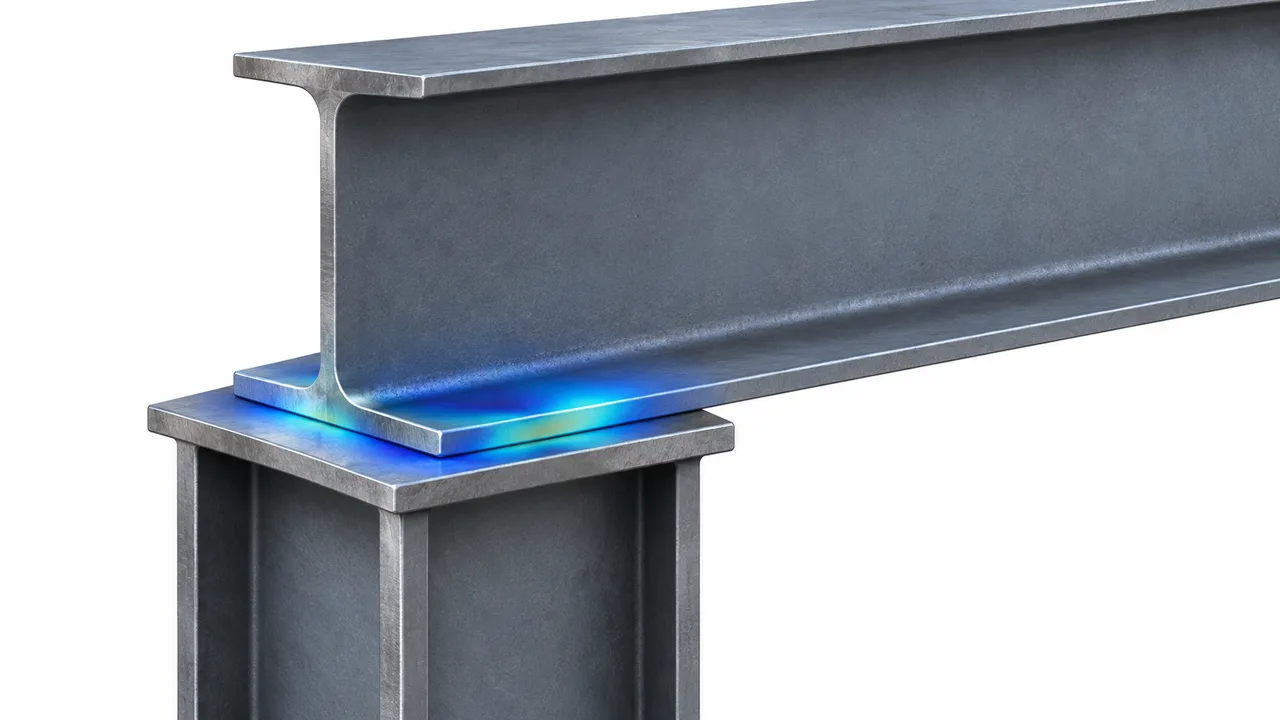
Local beam design cannot be separated from support and connection detailing.
The structural engineer should coordinate:
- Support reaction magnitude
- Actual support width
- Bearing plate dimensions
- Beam flange thickness
- Beam web thickness
- Bolted or welded connection geometry
- Bearing stiffener locations
- Erection tolerances
- Load direction and eccentricity
Shop drawings should clearly show bearing plates, stiffeners, weld sizes, support positions, member orientation, and any other details required to establish the intended load path.
This coordination is particularly important for fabricated steel projects where the design model, connection drawings, workshop fabrication, and site erection are completed by different teams.
At XTD Steel Structure, connection detailing and fabrication planning should be coordinated with the primary member design so that local strengthening measures can be incorporated before components reach the workshop floor.
A bearing condition that looks acceptable on a general arrangement drawing may change once actual connection clearances, plate dimensions, bolt groups, or erection tolerances are introduced.
Early coordination helps avoid field modifications such as unplanned stiffener welding, support plate replacement, or changes to installed beams.
Web Crippling Bearing Length: Final Design Considerations
Web crippling bearing length is an important part of concentrated-load design because the length of the bearing region influences how a reaction enters the flange and spreads into the beam web.
A very short bearing region can create severe localized demand even when the beam has adequate global bending and shear strength. Increasing the bearing length can often improve local resistance, but it should not be treated as a universal solution.
Designers must also consider:
- Web thickness and slenderness
- Flange stiffness
- Steel strength
- End versus interior loading
- Web local yielding
- Bearing plate behavior
- Stiffener requirements
- Connection geometry
- Fabrication access
- Erection tolerances
Proper bearing detailing can sometimes solve a localized beam problem without unnecessarily increasing the size of the entire structural member. In other cases, a thicker web or properly designed stiffener system will provide a more practical solution.
The objective is not simply to maximize bearing length, but to create a reliable load path from the applied reaction through the bearing component, flange, web, stiffeners where required, and into the supporting structure.
For fabricated steel projects, XTD Steel Structure can coordinate beam geometry, support detailing, bearing components, and workshop fabrication requirements as part of the overall structural steel solution.