Structural Requirements of Automotive Manufacturing Facilities
Large-Span Production Areas
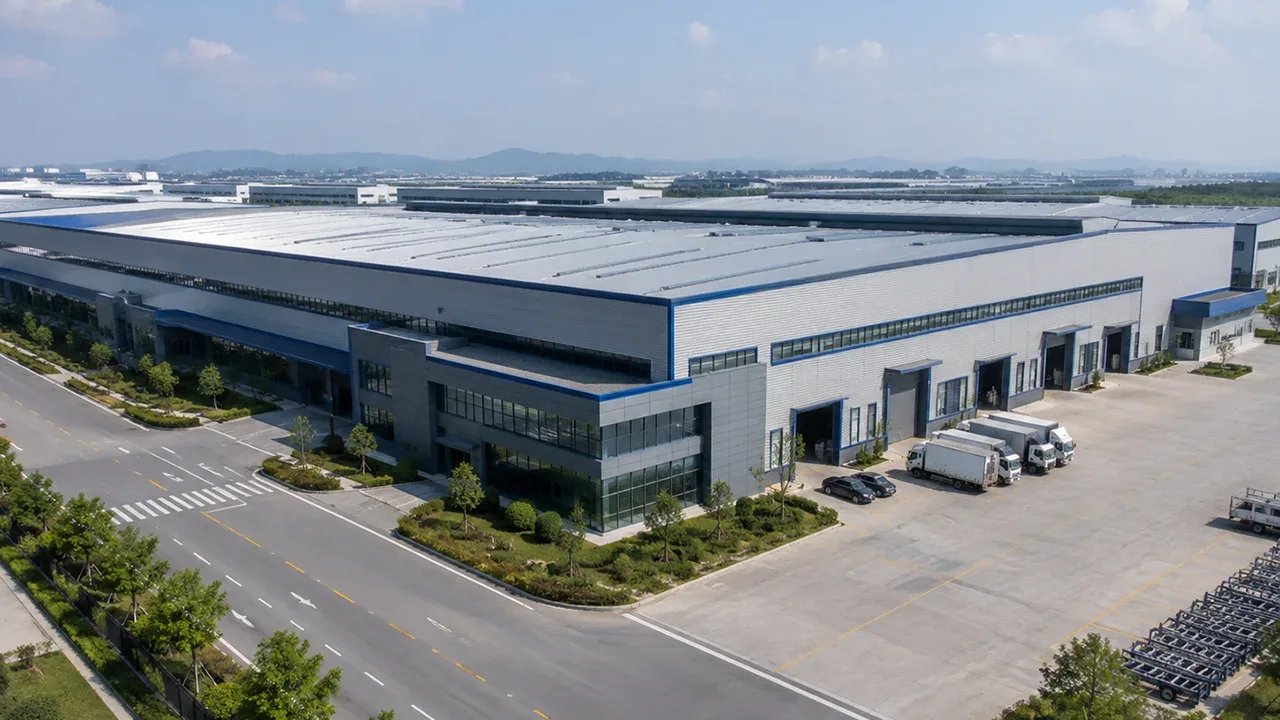
Automotive production depends on uninterrupted workflow. Assembly lines, body-in-white production zones, component staging areas, and inspection stations require wide interior spaces with minimal structural obstruction.
Steel frame systems allow engineers to design large-span workshops where equipment movement, vehicle assembly, and internal logistics can operate smoothly.
Heavy Equipment and Crane Support
Automotive factories often include lifting systems, robotic equipment, stamping machinery, welding lines, and heavy material handling systems. These requirements demand a structure with strong load-bearing performance.
A properly engineered steel structure factory for automotive industry can integrate overhead cranes, reinforced columns, equipment foundations, and roof systems designed for industrial loads.
Flexible Industrial Workflow Design
Automotive production lines frequently change as new vehicle models, EV platforms, or automation systems are introduced. Steel structures allow factory layouts to be modified more easily than many conventional building systems.
This flexibility is valuable for manufacturers planning long-term production upgrades.
Common Automotive Steel Structure Factory Applications
Vehicle Assembly Plants
Steel structures are widely used for vehicle assembly facilities because they provide large open production areas and efficient internal circulation.
- Final assembly workshops
- Body assembly areas
- Paint preparation zones
- Inspection and testing spaces
Automotive Parts Manufacturing Facilities
Parts factories require durable and efficient buildings for producing components such as chassis parts, metal assemblies, interior systems, and mechanical modules.
Steel construction supports both production and storage within the same facility.
EV Battery Production Workshops
The growth of electric vehicles has increased demand for specialized factory spaces. Battery production facilities often require clean layouts, controlled environments, and strong coordination between structure, ventilation, and equipment systems.
Logistics and Automotive Warehousing Areas
Automotive factories often include logistics buildings for inbound materials, parts sequencing, and finished component storage. Steel structure systems allow these warehouse zones to connect efficiently with production workshops.
Why Steel Structures Fit Automotive Industry Projects
Automotive manufacturing requires buildings that are fast to construct but strong enough for long-term industrial use. Steel structures meet this balance well.
Key advantages include:
- Fast-track construction for production deadlines
- Large-span layouts for assembly and logistics
- Strong compatibility with cranes and industrial equipment
- Expandable structure for future production capacity
- Durable performance in demanding factory environments
For automotive manufacturers, the building is part of the production system—not just a shell around the equipment.
Engineering Considerations for Automotive Factories
Load Distribution and Structural Stability
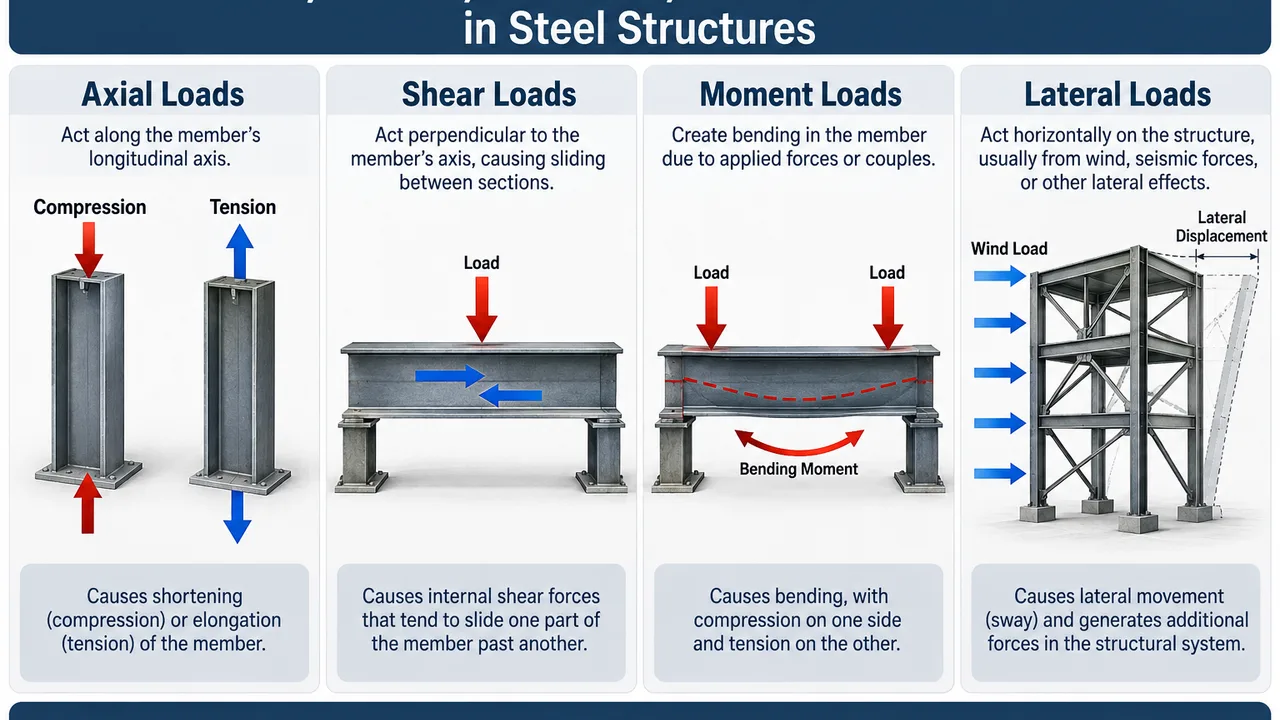
Load planning is one of the most important engineering steps in automotive factory design. Engineers must consider roof loads, crane loads, equipment loads, mezzanine loads, and operational movement inside the building.
| Design Area | Key Requirement |
|---|---|
| Production Hall | Large span and stable floor planning |
| Crane Zone | Column reinforcement and runway beam design |
| Logistics Area | Clear vehicle movement and loading access |
| Utility Zone | Integration with ventilation, power, and safety systems |
Ventilation and Environmental Systems
Automotive factories may involve welding, coating, battery production, or mechanical assembly. Each process has different ventilation and environmental requirements.
The steel structure must allow proper integration with exhaust systems, roof ventilation, insulation, and mechanical service routes.
Fire Safety and Industrial Compliance
Fire safety is critical in automotive manufacturing. Structural design may include fire-resistant coatings, separated production zones, emergency routes, and compliance with local industrial building standards.
Production Flow Optimization
A strong factory design supports movement from raw material intake to production, assembly, inspection, storage, and shipping. Steel structures help create open and adjustable spaces that improve production flow.
Fabrication and Industrial Construction Process
Precision Steel Fabrication
Steel components are manufactured according to detailed engineering drawings. Cutting, welding, drilling, and assembly are completed in controlled factory conditions to improve dimensional accuracy.
This precision is especially important for automotive projects where structural coordination must align with equipment installation plans.
Modular Industrial Construction
Many factory components can be prefabricated and shipped to the site for faster installation. This reduces site work and helps automotive projects meet tight construction schedules.
- Prefabricated columns and beams
- Roof framing systems
- Wall support structures
- Crane-supporting members
Multi-Phase Installation Coordination
Large automotive facilities may be built in phases. Structural installation must coordinate with civil works, equipment foundations, MEP systems, and production line installation.
As an integrated steel structure provider, XTD Steel Structure supports design, fabrication, shipment, and construction coordination for industrial factory projects.
Long-Term Advantages for Automotive Manufacturers
A steel factory building gives automotive manufacturers more than construction speed. It also supports operational adaptability over many years.
Production lines can be upgraded, storage zones can be adjusted, and additional workshop areas can be planned as market demand changes. This is especially important in the automotive sector, where manufacturing technology evolves quickly.
Steel structures also provide durability and relatively low maintenance when protected with proper coatings and inspection programs. For large-scale automotive production, this helps reduce lifecycle costs and keeps facilities reliable during continuous operation.
Choosing an Automotive Steel Structure Partner
Building an automotive factory requires more than general steel construction experience. The project partner must understand industrial workflow, equipment integration, fabrication precision, and phased construction management.
Important capabilities include:
- Structural engineering for heavy industrial buildings
- Experience with large-span factory workshops
- Manufacturing capacity for large steel components
- Quality control during fabrication
- Coordination with logistics and installation teams
For global automotive projects, export handling, documentation, packing, and delivery planning also play an important role in project success.
Frequently Asked Questions
Why use steel structures for automotive factories?
Steel structures provide large spans, strong load capacity, fast construction, and flexibility for future production changes.
Can steel structures support heavy production equipment?
Yes. With proper engineering, steel factories can support cranes, heavy machinery, production lines, and industrial utility systems.
Are steel factories suitable for EV manufacturing?
Yes. Steel structure factories can be designed for EV assembly, battery production, parts manufacturing, and related logistics facilities.
Can an automotive steel factory be expanded later?
Yes. Steel structures are suitable for modular expansion, making them practical for long-term production growth.
Build Efficient Automotive Production Facilities
A well-planned steel structure factory for automotive industry gives manufacturers the structural strength, layout flexibility, and construction speed required for modern production. From vehicle assembly to EV component manufacturing, steel factory systems can support efficient industrial growth.
With the right engineering and fabrication partner, automotive companies can develop production facilities that are durable, expandable, and ready for future manufacturing demands.