Steel Structure Manufacturing Services for Infrastructure Projects
A coordinated infrastructure manufacturing service connects technical review, production detailing, material preparation, CNC processing, welding, assembly, dimensional verification, surface treatment, documentation, packing, and delivery planning. Each stage must support the next because errors in early production can affect multiple interfaces during later assembly and erection.
The exact scope varies according to project type, structural system, component size, destination, specification, and construction schedule. Large infrastructure programs may require several fabrication packages to progress simultaneously while maintaining consistent identification and quality control.
From Infrastructure Design Requirements to Fabrication Packages
The process begins with structural drawings, technical specifications, available models, connection information, material requirements, and project-specific criteria. Manufacturing teams review member geometry, joint conditions, interfaces, tolerances, processing requirements, welding access, transport constraints, and practical assembly considerations.
This information is then organized into manageable fabrication packages. Clear member marks, plate configurations, hole patterns, assembly references, and production priorities help reduce ambiguity across cutting, fitting, welding, inspection, finishing, and dispatch.
Manufacturing Coordination for Large Infrastructure Programs
Large projects rarely move through the workshop as one continuous production batch. Primary frames, heavy nodes, roof systems, secondary members, connection assemblies, and special components may follow different manufacturing sequences.
Production planning should reflect dependencies between these packages. Critical nodes may require verification before associated members advance, while certain structural zones may need priority because they are linked to early erection milestones or critical-path construction activities.
Infrastructure Projects We Support
Airport and Aviation Infrastructure
Airport-related structures can include terminal buildings, large-span roof systems, concourses, entrance canopies, circulation spaces, maintenance facilities, and specialized support structures. These projects frequently combine substantial spans with complex interfaces and architectural requirements.
Manufacturing planning must consider geometry, component segmentation, connection compatibility, transport limitations, and installation sequence, particularly where large roof structures or irregular public spaces are involved.
Railway and Transit Infrastructure
Railway stations, transit buildings, platform canopies, transfer halls, passenger circulation structures, and other transport facilities often require steel systems that support open spaces while coordinating with operational infrastructure.
Structural manufacturing may need to address long spans, phased construction, restricted installation periods, dense interfaces, and connections between new steelwork and other structural systems.
Bridge-Related and Corridor Structures
Infrastructure programs may require applicable structural steel bridge components, elevated corridors, pedestrian connections, enclosed passage structures, or utility-supporting assemblies. These systems can involve strict alignment requirements and interfaces between separately fabricated segments.
Dimensional control, splice planning, component identification, and delivery coordination become especially important where multiple sections must connect accurately in the field.
Highway and Road Infrastructure
Steel structures can support toll stations, large road canopies, service facilities, roadside operational buildings, and project-specific support systems. These applications may combine repetitive components with large custom assemblies.
Manufacturing packages can be organized around installation zones to improve delivery control and reduce unnecessary handling at active infrastructure sites.
Port and Logistics Infrastructure
Ports, logistics hubs, cargo facilities, large operational shelters, and industrial transport developments may require durable steel structures capable of supporting intensive operations and demanding environmental conditions.
Manufacturing planning may need to account for heavy loads, large clear spaces, equipment interfaces, coastal exposure, and phased expansion requirements.
Energy and Utility Infrastructure
Steel structures for energy and utility projects can include equipment support frames, maintenance platforms, pipe-supporting structures, access systems, and project-specific structural frameworks. These components often interact directly with operational equipment and process systems.
Interface dimensions and access requirements should therefore be identified early and monitored throughout fabrication.
Public and Municipal Infrastructure
Public service buildings, civic facilities, large public roofs, exhibition-related structures, transport-linked buildings, and specialized municipal facilities can require structural steel systems combining durability, open space, architectural geometry, and long-term service requirements.
Why Infrastructure Steel Structure Manufacturing Is Different
Large Scale and High Component Volume
Infrastructure programs can involve substantial tonnage and thousands of related components. Production control must remain effective across repetitive members, unique nodes, heavy assemblies, secondary steelwork, and multiple shipment packages.
Increasing output without maintaining identification and inspection discipline can create downstream problems. Capacity must therefore be supported by controlled production management.
Long-Span and Heavy Structural Members
Deep beams, heavy columns, built-up sections, large trusses, transfer structures, and oversized segments require suitable processing, lifting, turning, welding, inspection, and handling capability within the fabrication facility.
The ability to manufacture a large component must be considered together with the ability to move, inspect, finish, pack, transport, and eventually erect it.
Complex Interfaces Between Multiple Systems
Infrastructure steelwork may connect with reinforced concrete, façades, equipment, mechanical and electrical systems, transport systems, roofing assemblies, and secondary structural elements. Errors at these interfaces can affect more than the steel package itself.
Early coordination helps identify critical dimensions and areas where accumulated tolerances could create installation difficulties.
Strict Dimensional and Connection Requirements
Hole positions, node geometry, bearing locations, splice interfaces, member alignment, and mating surfaces may require focused control. Large structural systems can amplify small dimensional deviations when multiple components are assembled together.
Inspection priorities should therefore distinguish critical interface dimensions from general fabrication dimensions.
Long-Term Durability Requirements
Infrastructure assets are often expected to remain in service for extended periods under demanding exposure conditions. Humidity, industrial atmosphere, coastal environments, temperature variation, and maintenance limitations may influence surface preparation and protective coating requirements.
Engineering Review Before Infrastructure Steel Fabrication
Structural Drawing and Specification Review
Before production begins, teams should review member schedules, steel grades, connection requirements, fabrication notes, welding criteria, surface protection requirements, and applicable project specifications.
Missing, conflicting, or unclear information should be identified before materials enter production. Early clarification is generally more efficient than correcting completed components.
3D Model and Interface Coordination
Where digital models are available, three-dimensional review can help visualize spatial relationships, complex nodes, crossing members, interface zones, and potential clashes. This is particularly valuable for irregular structures and areas where multiple systems converge.
Fabricability Assessment
A structurally valid design must also be practical to manufacture. Components should be evaluated for cutting, forming, fitting, welding access, inspection access, workshop handling, transportation, and installation.
This assessment can identify opportunities to improve production practicality without compromising the approved structural intent.
Tolerance and Control Point Planning
Critical dimensions can be identified before fabrication starts. Control points may be established for major connections, equipment interfaces, mating assemblies, segment splices, and alignment-sensitive components.
Planned verification helps manage accumulated dimensional variation across large infrastructure structures.
Infrastructure Steel Structure Detailing and Production Coordination
Shop Drawing Development
Shop information translates engineering requirements into practical production instructions. It may define member marks, plate dimensions, hole patterns, weld details, assembly relationships, and references required by workshop teams.
Clear production information supports consistent execution across multiple manufacturing stages and reduces avoidable interpretation errors.
Component Identification and Data Control
Large projects may contain extensive numbers of related members. Consistent identification helps connect materials, production status, inspection records, packing lists, and delivery packages.
Effective data control is especially important when multiple fabrication lots progress in parallel.
Revision Management
Infrastructure projects can evolve during execution. Approved revisions must be communicated and controlled so outdated information does not continue into cutting, drilling, assembly, or welding.
Revision discipline protects both production efficiency and interface compatibility.
Material Procurement and Preparation
Structural Steel Material Verification
Material grades, dimensions, certificates, and project-specific requirements should be checked according to the applicable quality plan. Where required, traceability can connect incoming materials with relevant production and inspection records.
Plate and Section Preparation
Preparation operations may include cutting, sawing, beveling, end preparation, notching, drilling, and project-specific profiling. Accurate preparation supports better fit-up and reduces unnecessary correction during assembly.
Material Traceability for Infrastructure Projects
When specified, traceability records can be maintained across material receipt, processing, assembly, and inspection. This is particularly relevant for large projects with defined documentation requirements or multiple production lots.
CNC Processing for Infrastructure Steel Components
CNC Plate Cutting
CNC processing can prepare connection plates, stiffeners, gusset plates, heavy plate components, and custom profiles with repeatable accuracy. Digital cutting data is particularly useful where projects combine high component volume with varied geometries.
CNC Drilling and Hole Preparation
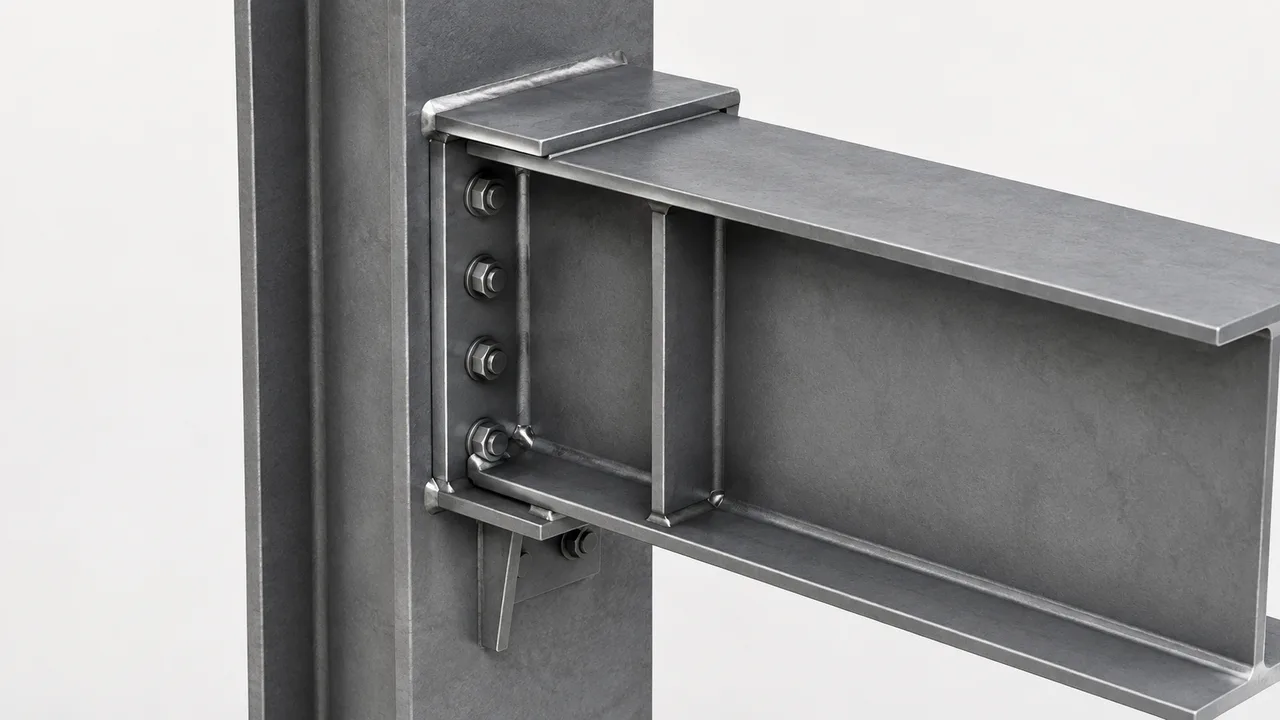
Accurate bolt-hole preparation supports alignment between mating components and can reduce corrective work during erection. Hole patterns should correspond with approved production information and critical connection requirements.
Precision Processing for Non-Standard Geometry
Irregular components, angled interfaces, special nodes, and project-specific profiles may require precise digital processing. Accuracy at the individual part level supports better downstream assembly of complex structures.
Welding and Assembly for Infrastructure Structures
Controlled Welding Procedures
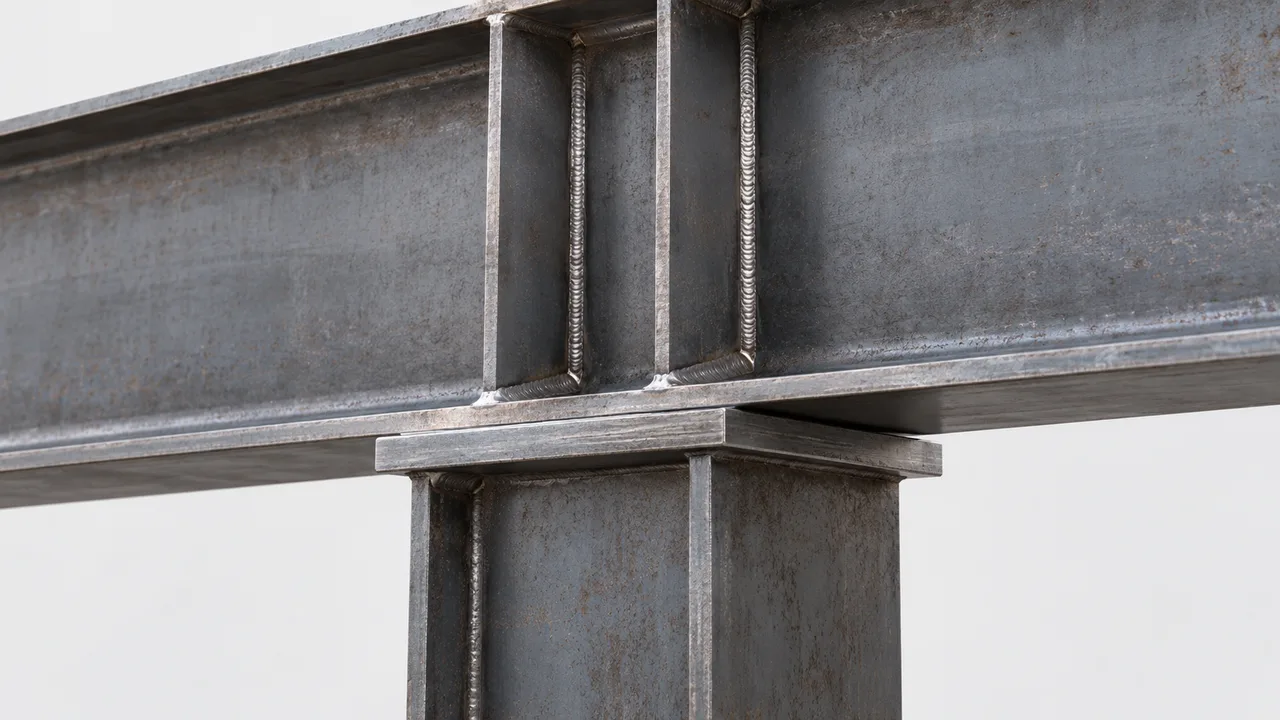
Welding requirements depend on material grade, thickness, joint configuration, structural demand, and project specifications. Appropriate procedures and production controls help maintain consistent joint quality.
Sequence planning is also important because heat input can influence dimensional stability.
Heavy Built-Up Member Fabrication
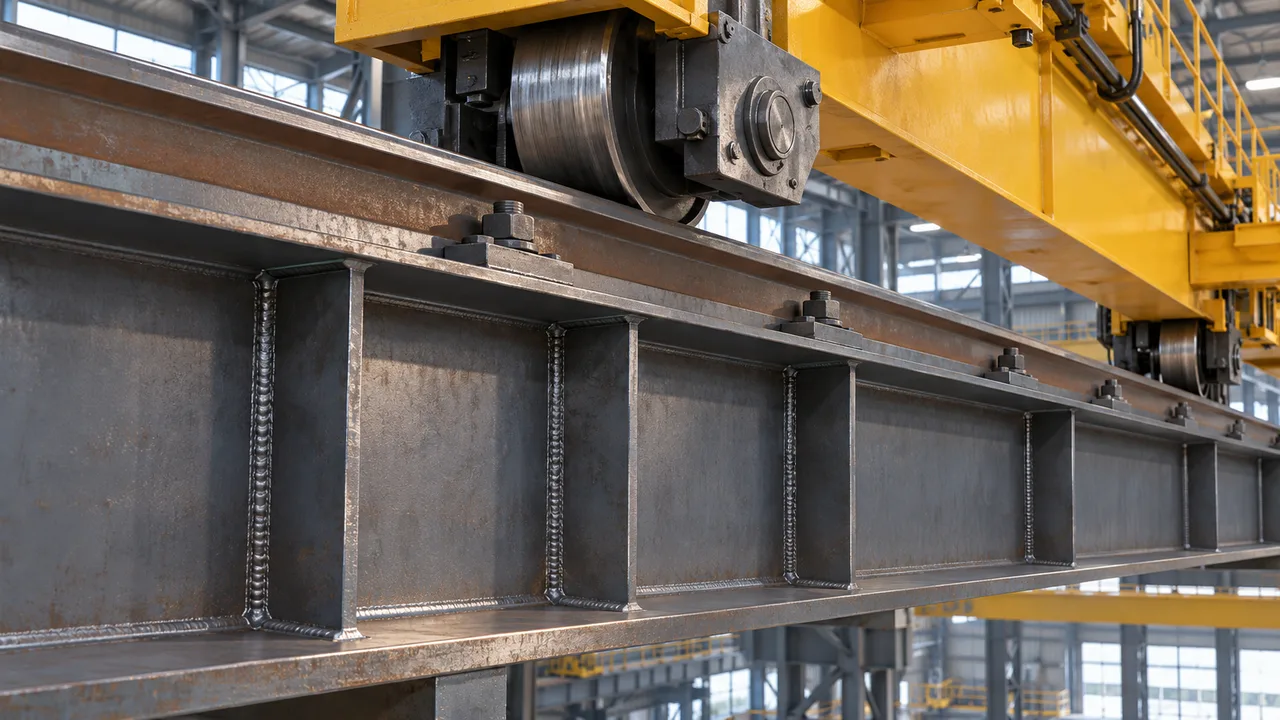
Built-up beams, fabricated girders, heavy columns, and variable-depth members may be required where standard rolled sections do not meet structural or geometric needs. Their production requires coordinated plate preparation, fitting, welding, handling, and dimensional verification.
Distortion Management
Distortion can be managed through balanced welding sequences, suitable fixtures, temporary restraints, controlled fit-up, and intermediate dimensional checks. The appropriate approach depends on member geometry and joint arrangement.
Complex Node Assembly
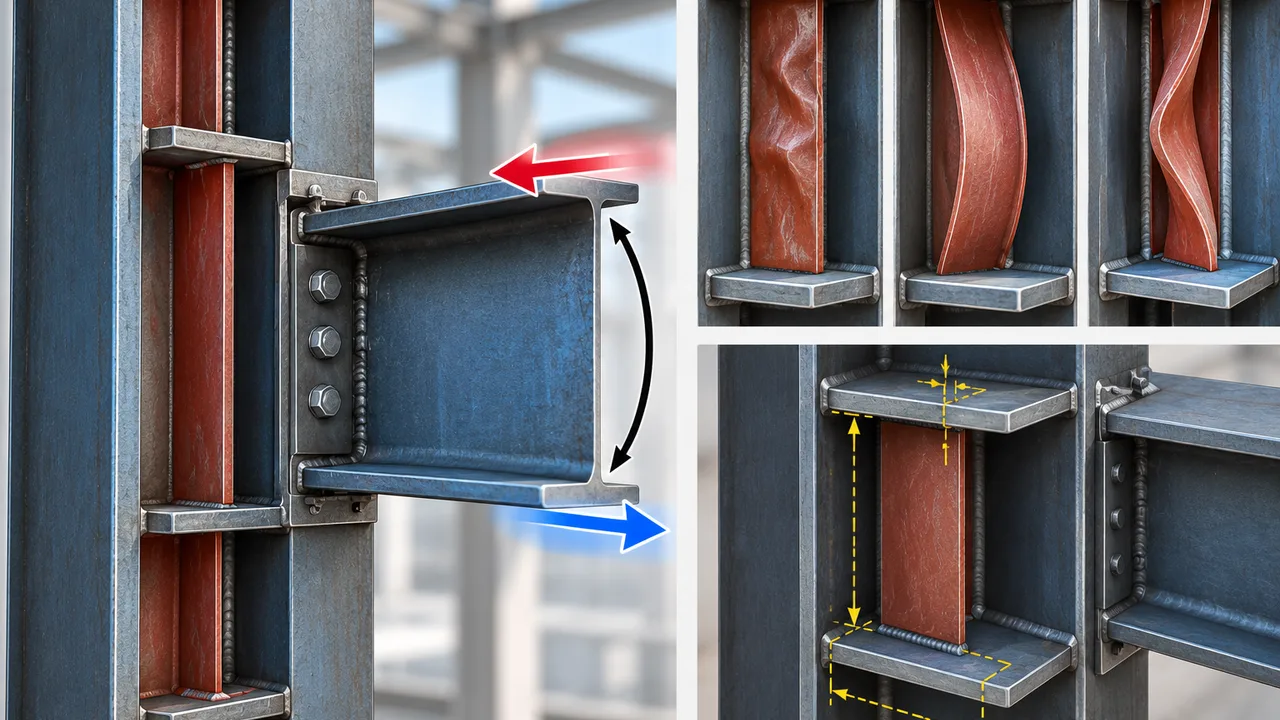
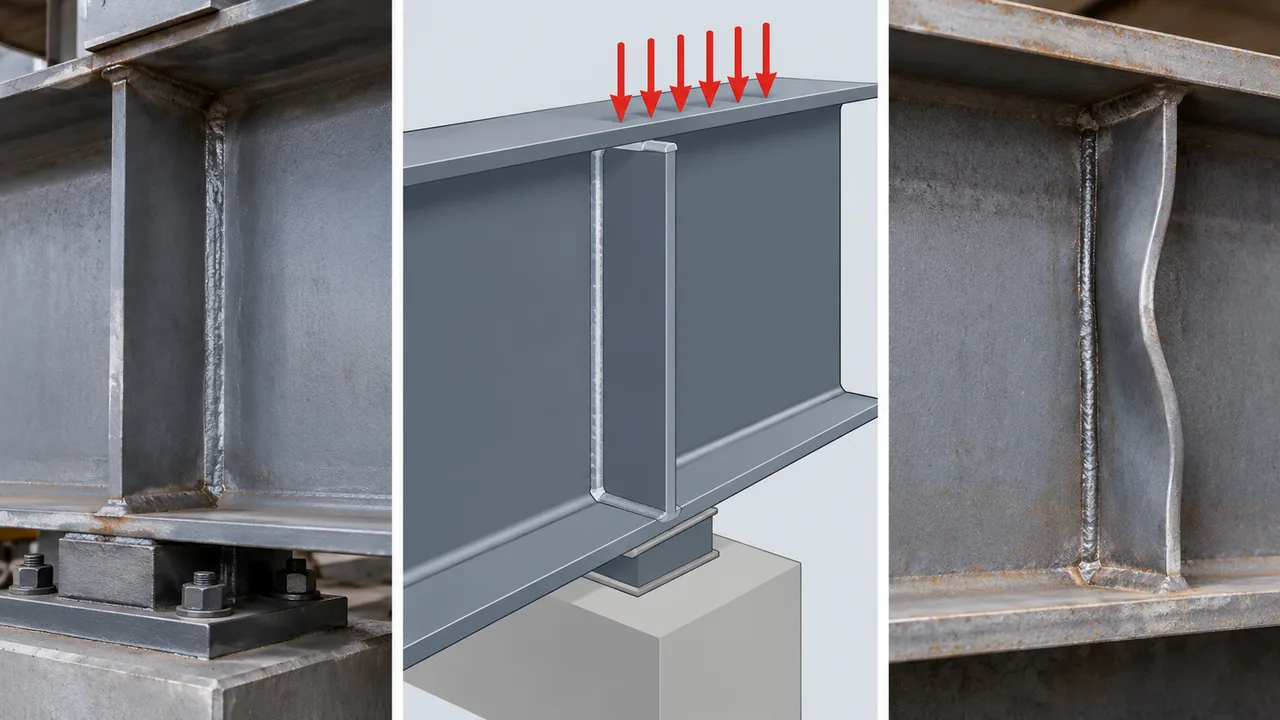
Multi-member intersections, heavily stiffened joints, spatial nodes, and dense connection zones require careful assembly planning. Practical access for fitting, welding, and inspection must be considered before the node is closed by subsequent operations.
Manufacturing Large-Span Infrastructure Structures
Large Roof Trusses
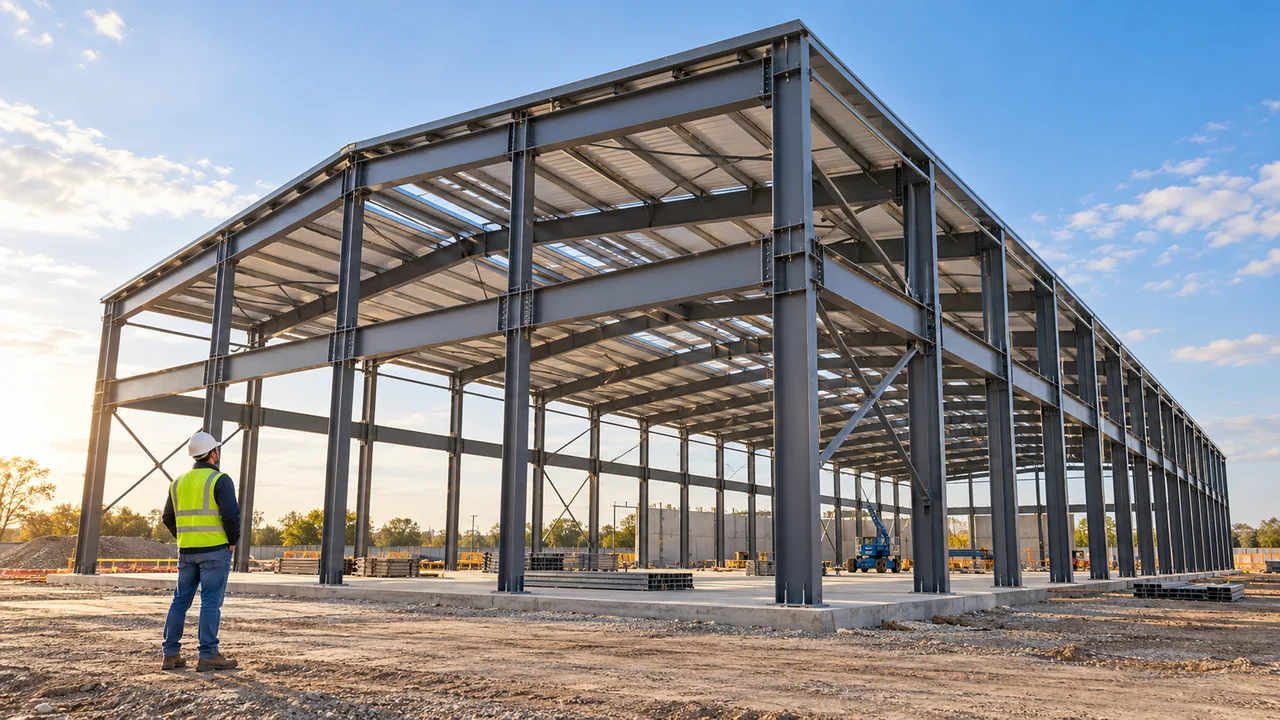
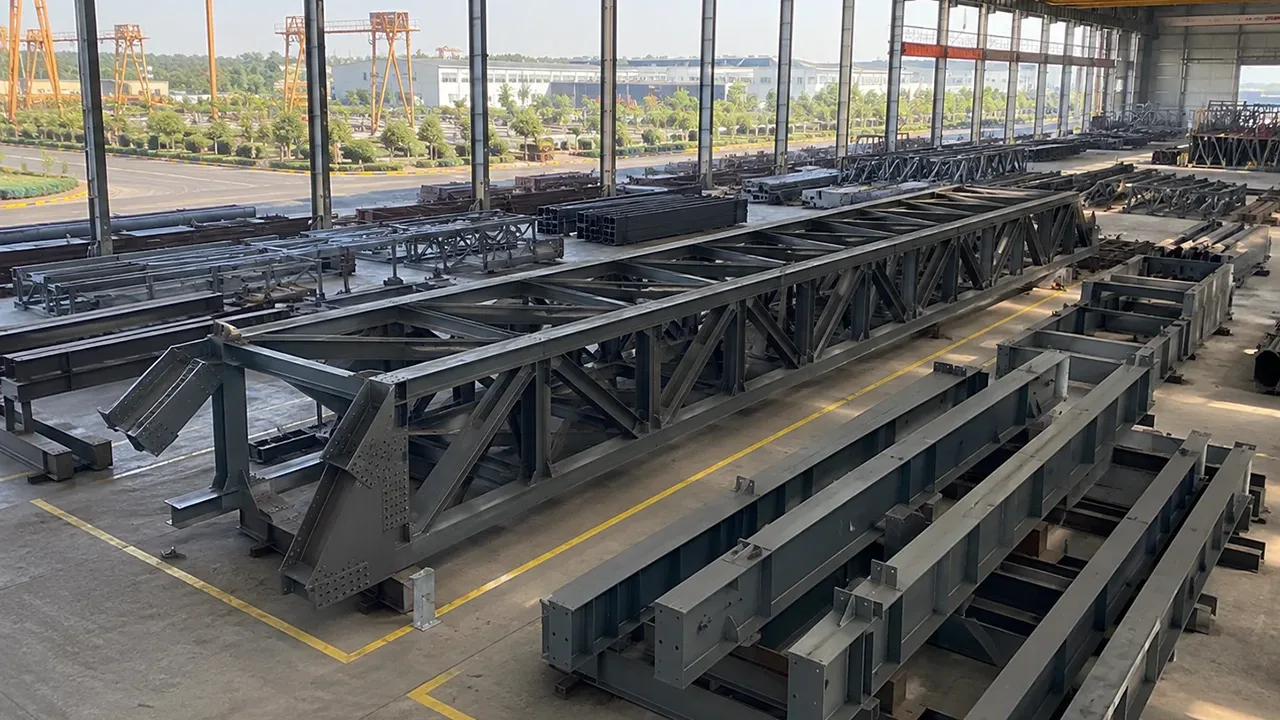
Transport terminals, public facilities, industrial infrastructure, and other large covered spaces may use long-span roof trusses. These assemblies can require controlled geometry, planned splice positions, specified camber, and coordinated segmentation.
Space Structures and Three-Dimensional Systems
Space structures depend on coordinated relationships between numerous members and nodes. Accurate identification and geometric control are essential because errors can propagate across interconnected three-dimensional systems.
Segmented Fabrication for Oversized Structures
Oversized assemblies can be divided into practical transport units. Segment dimensions and field splice positions should be coordinated with structural requirements, shipping limitations, lifting capacity, and erection access.
Trial Assembly Where Required
Trial assembly may be appropriate for critical nodes, multi-segment trusses, spatial assemblies, or other sensitive interfaces. The purpose is to verify compatibility before shipment and reduce dependence on extensive field corrections.
Quality Control for Infrastructure Steel Manufacturing
Incoming Material Inspection
Incoming materials can be checked for grade, dimensions, identification, condition, and required documentation before entering production.
In-Process Fabrication Inspection
Inspection during fabrication can monitor fit-up, hole positions, geometry, control dimensions, assembly conditions, and defined welding stages. Detecting deviations early can prevent them from becoming embedded in completed assemblies.
Weld Inspection
Inspection may include visual examination and applicable non-destructive testing according to project requirements. Acceptance criteria, inspection extent, and records should align with relevant specifications.
Final Dimensional Verification
Final checks can address overall geometry, alignment, critical interface dimensions, connection compatibility, and project-specific control points before components are released for finishing or shipment.
Documentation and Traceability
Material records, inspection documentation, component identification, and other required quality information can be coordinated according to project specifications and agreed manufacturing scope.
Surface Protection for Infrastructure Steel Structures
Surface Preparation
Cleaning and abrasive blasting may be specified to establish suitable conditions for protective coating adhesion. Preparation requirements depend on the selected protection system and project environment.
Protective Coating Systems
Protection may include anti-corrosion primers, intermediate coats, topcoats, or project-specific industrial systems selected according to environmental exposure and specification requirements.
Hot-Dip Galvanizing Where Appropriate
Hot-dip galvanizing may be suitable for certain secondary components or exposed infrastructure elements. Geometry, dimensions, ventilation, drainage, and distortion risk should be reviewed before treatment.
Protection for Aggressive Environments
Coastal exposure, industrial atmosphere, persistent humidity, and other demanding conditions may require enhanced corrosion protection strategies. The selected system should reflect the actual service environment and project requirements.
Production Capacity for Large Infrastructure Projects
Multi-Lot Production Planning
Large programs may require several fabrication packages to progress simultaneously. Production planning should coordinate priorities, dependencies, inspection points, finishing capacity, and delivery milestones.
Parallel Manufacturing Workflows
Where practical, different packages can move through separate or coordinated processing streams. Cutting, drilling, fitting, welding, inspection, surface treatment, and packing capacity must remain balanced to avoid bottlenecks.
Scalable Production Without Losing Control
Higher output should not remove critical dimensional checks, inspection stages, or component identification. Scalable manufacturing depends on maintaining technical control while increasing production volume.
Schedule Coordination for Phased Infrastructure Programs
Manufacturing priorities can be aligned with construction phases and critical-path requirements. Early structural zones may be prioritized while later packages continue through processing and assembly.
Logistics and Delivery Planning for Infrastructure Projects
Component Marking and Packing
Clear member identification helps site teams connect delivered components with installation packages. Packing should also protect critical surfaces, connection zones, and vulnerable components during handling and transport.
Containerized and Breakbulk Shipping
Shipping methods depend on component dimensions, weight, destination, and project schedule. Smaller packages may suit containerized transport, while oversized members can require breakbulk or other specialized arrangements.
Oversized Component Transport Planning
Large structural segments should be evaluated against practical transport dimensions, handling requirements, lifting considerations, and destination constraints before final fabrication segmentation is confirmed.
Erection-Oriented Delivery Sequencing
Random shipment order can create unnecessary site handling. Where project conditions allow, delivery packages should reflect erection priorities so unloading, storage, and installation can progress more efficiently.
International Infrastructure Project Support
Export-Oriented Manufacturing
A steel structure manufacturer for infrastructure serving international projects must consider export packing, component identification, shipment dimensions, destination requirements, and practical overseas delivery conditions during production planning.
Project Documentation Coordination
Material records, inspection documents, packing information, component schedules, and other agreed project documentation can be coordinated with manufacturing progress.
Delivery to Multi-Phase Construction Sites
For phased projects, production and shipment can be organized around construction priorities. This helps reduce the mismatch between workshop completion and actual site demand.
Why Choose an Infrastructure-Focused Steel Structure Manufacturer?
Experience With Large and Complex Structural Systems
Infrastructure manufacturing requires the ability to handle long spans, heavy members, spatial structures, complex nodes, non-standard geometry, and large numbers of interconnected components.
Integrated Manufacturing Capability
Engineering review, detailing coordination, CNC processing, welding, heavy assembly, dimensional verification, surface treatment, quality management, and logistics preparation should operate as connected functions rather than isolated services.
Quality Control Across Large Project Volumes
Consistent inspection and identification are essential when multiple production lots and project phases progress simultaneously. Quality control must remain practical, documented where required, and connected with production priorities.
Coordination Beyond Basic Steel Fabrication
Infrastructure projects require attention to transportability, interfaces, installation sequence, delivery packaging, and construction milestones. A manufacturer should understand how workshop decisions influence later project stages.
XTD Steel Structure supports demanding infrastructure projects through coordinated engineering review, production planning, CNC processing, welding, assembly, quality control, surface protection, and delivery preparation for large-scale and non-standard structural systems.
Frequently Asked Questions
What types of infrastructure projects require structural steel manufacturing?
Applications can include airports, railway stations, transit facilities, public buildings, logistics infrastructure, utility structures, large-span roofs, industrial infrastructure, corridors, and other specialized engineered facilities.
Can large infrastructure steel structures be fabricated in transportable sections?
Yes. Large structures can be segmented into practical shipping units, with field splice locations coordinated according to structural requirements, transport restrictions, lifting capacity, and erection sequence.
How is dimensional accuracy controlled on large projects?
Accuracy can be managed through coordinated detailing, CNC processing, defined control points, in-process inspection, dimensional verification, and trial assembly of critical interfaces where necessary.
Can infrastructure steel structures be manufactured for international projects?
Yes. International delivery can be supported through export-oriented packing, component identification, containerized or breakbulk shipping planning, documentation coordination, and installation-focused delivery packages.
How are large production volumes managed?
Large volumes can be managed through multi-lot planning, parallel workflows, phased priorities, component identification, defined inspection checkpoints, and coordination between production and delivery milestones.
Start Your Infrastructure Steel Structure Manufacturing Project
Choosing the right steel structure manufacturer for infrastructure requires evaluating more than nominal workshop capacity. Large infrastructure projects depend on coordinated engineering interpretation, practical production planning, accurate processing, controlled welding, dimensional management, quality inspection, surface protection, and logistics preparation across the complete manufacturing cycle.
For transport facilities, public infrastructure, logistics developments, utility structures, large-span systems, heavy industrial infrastructure, and other demanding projects, early technical review can help establish a practical manufacturing strategy. Project drawings, specifications, available models, estimated tonnage, destination, required surface protection, and schedule information can be reviewed to define production packages, critical interfaces, delivery priorities, and the appropriate path toward fabrication.